
Health Blog
Written by Dr. Heo Ji-young. Each piece takes a single symptom and follows what is actually happening in the body.
One Test Sees One Moment; the Body Holds the Years
Some tests do read time. HbA1c holds the average of the past two or three months. Most tests, though, measure today's value, while what troubles the body comes from time that has accumulated.
Tests Look at Items Separately; Symptoms Speak of What Lies Between
Tests examine organs one at a time. Yet much of what troubles the body comes not from a single organ but from the coordination between them — every part sound, and the ensemble out of step.
What a Scar Leaves Behind
The body does not restore a wound to what it was; it closes it quickly. What fills that gap is collagen laid down in a different weave, so the place stretches less and springs back less. Nor does this happen only on the surface.
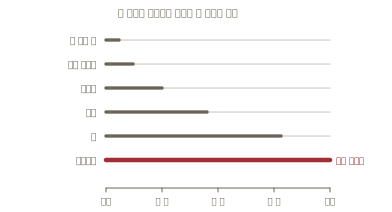
The Body Does Not Age All at Once
Cells live for different lengths of time depending on where they are. Some places are replaced within days; others stay as they are for a lifetime. Because that rate of replacement — turnover — differs, age is a single number while several clocks run separately inside the body.
The Organs in Your Abdomen Ride Up and Down with Your Breath
You are asked to hold your breath for an abdominal scan because everything in there keeps moving. Even in quiet breathing the diaphragm travels 1 to 2.5 centimeters, and the liver, stomach and kidneys ride along with it.
Why the Scale Reads Differently Morning and Night
The weight that moves within a single day is usually water, not fat. A scale measures the total amount accurately, but it does not tell you where in the body that water has gone.
The Neck Is Narrow, and a Great Deal Has to Pass Through
The neck is barely a handspan around, yet the airway, the swallowing path, the blood vessels, and the nerves all pass through it. The nerve that moves the diaphragm also comes out of the neck. That narrowness is part of why a stiff-necked day is also a shallow-breathing day.
Not a Big Fire but Low-Grade Embers
Inflammation is not only the big fire that blazes up. Embers that burn low for years without turning red, swelling, or hurting (low-grade chronic inflammation) barely register on tests because the numbers stay ambiguous.
Why Aging Shows First at the Toes
The signs of aging come to the toes before the trunk. The longest nerves and the farthest vessels are the first to run out of reserve. The toes are an early news carrier for the whole body.
There Is a Waterway That Washes the Brain While You Sleep
Sleep is not only a time to rest but a time to wash the brain. While you sleep, the gaps between brain cells widen and cerebrospinal fluid washes away waste. When the hours of sleep are filled but the cleaning falls behind, the morning feels heavy.
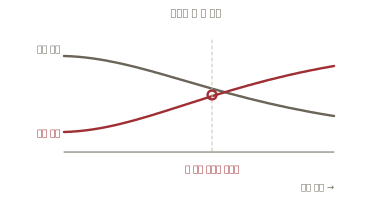
Sleep Comes as the Hands and Feet Grow Warm
Sleep comes as the hands and feet grow warm. The vessels of the hands and feet open to release heat, and the body's core temperature must fall for sleep to set in. When the hands and feet are cold, that window does not open well.
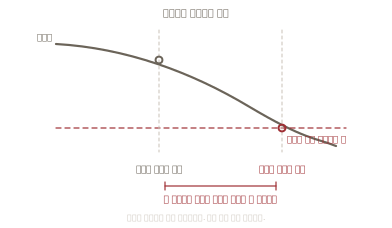
Fatigue Comes Before the Numbers
A test catches something only once it crosses the line dividing normal from abnormal. The thinning of the body's reserve usually happens long before that line, and the body reports it first as fatigue.