
Fatigue Comes Before the Numbers

The short answer
A test catches something only once it crosses the line dividing normal from abnormal. The thinning of the body's reserve usually happens long before that line, and the body reports it first as fatigue.
Contents
Fatigue Comes Before the Numbers
Many people come in saying, "I'm so tired these days." Worried it might be something serious, they get tested, and usually there is no major abnormality. Then only the question remains: "So why am I this tired?"
At times like this, I tell them: Fatigue usually comes before the numbers.
The Body Has a "Reserve"
Our body always holds a little more than it needs. The heart, the kidneys, the muscles — all keep in reserve more power than they use day to day. This kept-back power is called reserve capacity. That the body holds up when you suddenly run up the stairs or stay awake all night is thanks to this reserve.
When you are healthy, this reserve is ample. So it does not show under most strain. But when this reserve begins to be shaved a little in several places — when sleep is light, digestion slow, inflammation burning low like embers, circulation a little stagnant — the body is not yet "ill," but reaches a state where the reserve has thinned.
Tests Catch Only Past the Line; Fatigue Comes Before It
Tests have a line dividing normal from abnormal. A value has to cross that line to be caught as "abnormal." But the shaving of reserve usually happens long before that line is crossed. Each number is still within the normal range; only the reserve has thinned.
The body reports first as fatigue the situation that, with reserve reduced, it could fall short at any time. When reserve drops, the same work feels harder and recovery is slower. So fatigue is not laziness or weakness, but a signal by which the body reports first a loss of reserve that the numbers have not yet caught. This is why being tired while the tests are normal is no contradiction.
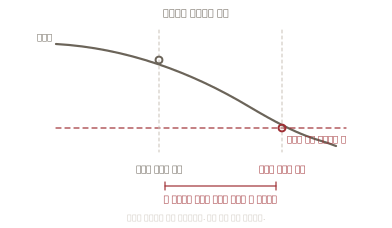
The Tired Times Are the Times to Look
We commonly treat fatigue as something that rest will fix, and pass it by. I see it a little differently. The moment reserve has thinned is the moment a tilt, once hidden by everyday abundance, becomes visible. When reserve is ample, a slight tilt to one side does not show; but when reserve drops, that tilt appears first as fatigue.
So I do not leave "I'm tired" as merely "a matter that rest will fix"; I look together at where reserve is being shaved. Is it sleep, digestion, or circulation? Fatigue is often an early signpost pointing to that place.
But if fatigue that rest does not relieve continues for a long time, if weight drops for no reason, or if fever, cold sweats, or pain come along with it — that is different from this story. A test to find the cause comes first.
"The tests are normal" means "there is no abnormality that crossed the line"; it does not mean "there is ample reserve."
If you are always tired but the tests are fine, that is not making a fuss, but may be the body's earliest report that a reserve the numbers have not yet caught is thinning.
References
- Fatigue is an early signal of thinning reserve and appears years before frailty — a review of reserve capacity — Frontiers in Network Physiology, 2023
- Fatigue is intertwined with low inflammation and declining muscular endurance — an aging cohort — 2024
Written by Dr. Heo Ji-young (PhD in Korean Medicine Pathology, Kyung Hee University · former Research Professor of Herbology, Kyung Hee University)
Have a symptom that's been on your mind?
Choose a time on Naver, or send your concerns before your first visit.