
🔁
Better after treatment, then it hurts again
A few weeks later, the same spot starts hurting again — a pattern that keeps repeating.
Muscle and fascia, joints and ligaments, nerve pathways — we differentiate the cause of your pain and adjust where and how we treat accordingly.
There is a reason some pain eases only briefly with treatment
A few weeks later, the same spot starts hurting again — a pattern that keeps repeating.
Your lower back, neck, and shoulders grow heavier the longer your workday runs.
The numbness may travel down into your hips, legs, or arms.
Headaches recur along with tension in the neck and shoulders.
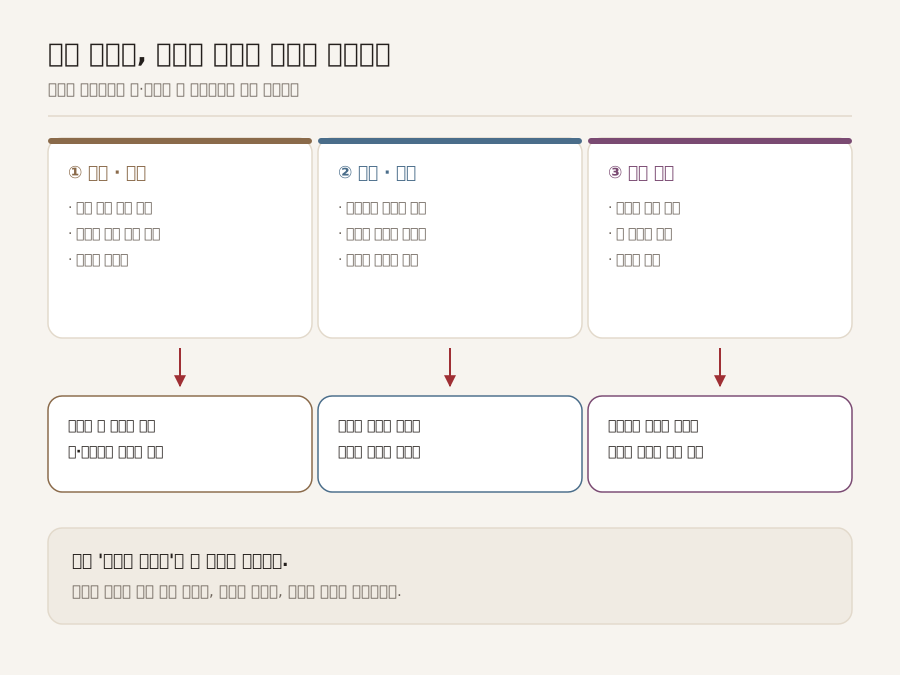
At the first visit, we identify the type of cause first — different types call for different treatment
Common among people whose work involves long hours of sitting or standing
Pharmacopuncture and acupuncture at tender points
We work to relax contracted muscle fibers and directly address areas where circulation has decreased.
The tissue around joints has limited blood supply, so recovery there tends to be slower
Pharmacopuncture around the joint
We work on acupoints around the joint and ligament attachment sites to support the conditions for recovery.
If the numbness covers a wide area or comes with weakness, we recommend imaging tests first
Combined acupuncture treatment
Acupuncture is used alongside other care, aiming to settle the sensitized state around the nerve pathway.
Less pain does not mean the body has recovered. Muscle endurance and joint range of motion need to return as well before the risk of recurrence can come down. That is why, even after the pain has settled, we check how far you can sit and walk, and set the next steps based on that.
We examine the pattern of your pain, the location of tender points, and your body alignment together to identify the type of cause.
The location and method of acupuncture and pharmacopuncture are applied differently depending on the type.
If postural imbalance is the cause, Thixotropic Chuna — a gentle form of Korean Medicine manual therapy — is used to reduce the structural strain.
We give specific guidance on sitting and walking rhythm and stretching, with concrete counts and durations.
Recurring headaches may stem from your posture and neck.
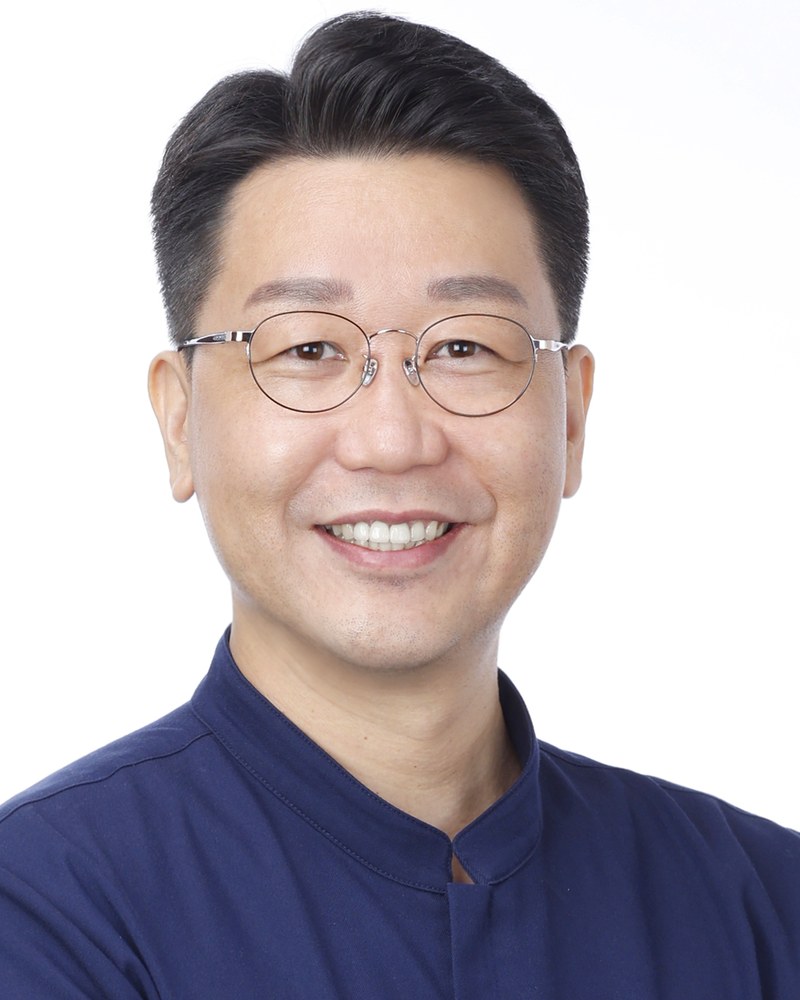
A graduate of the College of Korean Medicine at Kyung Hee University, with master's and doctoral degrees in pathology — the mechanisms of disease — from its graduate school. Later served as a research professor in the university's Herbology department, studying medicinal substances. Studying both disease and medicine from both sides is the foundation of this practice: explaining "why a given medicine works for a given illness" in the language of both pathology and pharmacology.
Explains autonomic, chronic, and intractable conditions — and structural problems of the body — in the language of modern science, and proposes treatment matched to the cause. Has taught prescribing and clinical practice to Korean medicine doctors for over ten years, and is a co-author of "Korean Medicine, Explained by Korean Medicine Doctors," selected for the 2018 Sejong Books list (general category).
A. Pain that persists or keeps recurring for three months or more is generally considered chronic. Even over a shorter period, if the pain keeps coming back, we recommend having the cause identified.
A. Yes. However, if the numbness extends down to your foot or you notice weakness, we recommend confirmation with imaging tests first. If you have previous test results, bringing them along is helpful.
A. In the acute phase, sessions are often 2–3 times a week, then about once a week as things stabilize. We set a plan together at your first visit based on your condition.
A. Acupuncture, moxibustion, and cupping are covered by National Health Insurance. Chuna manual therapy is covered for up to 20 sessions per year, while pharmacopuncture and herbal medicine are not covered. We will go over the details during your visit.
Have questions?
We're here to help.
02-446-1075
Weekdays 09:30 - 20:00 / Saturday 09:30 - 13:00
Lunch Break 12:30 - 14:00 / Closed Sunday · Public Holidays
Latest blog posts from our director
The cast came off, but you cannot make a full fist, and the bone is said to have healed well, yet the arm feels heavy by evening — which is right? Both are. What a test measures is whether it has been fixed; what the body measures is whether it can be used the way it once was. Being told the bone has healed is the starting line for using it again, not the finish line. If the pain has moved away from the site of the injury, or you cannot bear weight on it, or it looks different in shape, checking comes first.
When one molar aches, you start chewing on the other side without ever deciding to. Once the ache settles, you go back to normal before you notice. But in some bodies, those few days become years. The body does its part when it uses an injured spot less and shifts the load elsewhere to protect it — but what happens when the reason to guard it is gone, yet only the manner of guarding remains? If one limb visibly thickens within a few days, or a numb area keeps spreading, checking comes first.
A patient who told me it had been three years then asked, ‘So will it take three years to heal, too?’ Counted in days, that is how it sounds — but saying it has hurt for a long time also means the same thing has passed through that many times. A nerve connection strengthened by passing through many times has to pass through the opposite direction many times as well before it weakens. Direction is revealed not by the good days but by how low the bad days sink. If it only ever worsens, or wakes you at night, checking comes first.
We start by measuring blood pressure, pulse, and body temperature for everyone who visits.
If you are also considering an herbal medicine prescription, we review a questionnaire along with urine and blood sugar tests, oxygen saturation and perfusion index measured with a fingertip device, the mouth, the eyes' pupillary light response, breathing, and sympathetic nervous system response — together with a hands-on physical examination where we look, touch, and check your movement directly.
Based on what we find, we explain which part of your body is currently off balance. These checks are meant to reduce diagnostic error, rule out other underlying conditions, and prepare for any possible side effects. See the full list of what we check
For first-time patients, we often start with about one month; for chronic pain, we sometimes plan for around two months. The prescription is reviewed again every two weeks. Because of individual variation and the many variables in each person's physiology and condition, we cannot state this in absolute terms.
Instead of the term "chronic pain," we wrote these the way patients actually describe what they are experiencing
We do not divide the areas above into "this, because it is the elbow" or "that, because it is the knee." Not limiting the scope in advance, and instead matching it to the body's current condition — that is the principle Dr. Heo Ji-young applies in musculoskeletal care.
Because of this, a finding that starts with pressure in the upper abdomen can sometimes turn out to be connected to discomfort in the neck or shoulder. That connection is easy to miss if you decide on the affected area before you start looking.
The body does not work like a machine that uses bones as levers. It moves as a structure where tension spreads across a whole network to keep balance. Pull on one point, and a distant point moves along with it.
When the position and tension information coming up from the ankle and foot is off, the system that uses that information to calculate posture and movement keeps working from faulty input. That strain can end up showing up as symptoms in the low back or pelvis. This is a perspective Dr. Heo Ji-young has been placing more weight on in recent practice — so we look not only at the painful spot itself, but also at the spot where the information went wrong.
Kyunghee Meerae Korean Medicine Clinic, Gwangjin is located at Room 201, 46 Jayang-ro, Gwangjin-gu, Seoul, South Korea. It is a 7-minute walk from Guui Station Exit 4. · Directions
이 홈페이지의 모든 글과 도해는 경희미르애한의원 광진점 허지영 원장이 직접 작성한 저작물이며, 저작권법의 보호를 받습니다. 출처를 밝힌 정당한 인용을 넘어서는 무단 복제·전재·재배포, 그리고 AI 학습 데이터로의 사용을 허락하지 않습니다. 위반 시 저작권법에 따른 민형사상 책임이 따를 수 있습니다.
All articles and diagrams on this site are original works written by Dr. Heo Ji-young of Kyunghee Meerae Korean Medicine Clinic, Gwangjin, and are protected under Korean copyright law. Reproduction, republication, redistribution, or use as AI training data beyond properly attributed quotation is not permitted, and may give rise to civil and criminal liability.