
Health Blog
Written by Dr. Heo Ji-young. Each piece takes a single symptom and follows what is actually happening in the body.
The Phone Call the Gut Makes to the Brain
We think the brain commands the gut, but most of the vagus nerve's signals travel up from the gut to the brain. This direction is held within the way that, on a day the belly is uneasy, the mood sinks too.
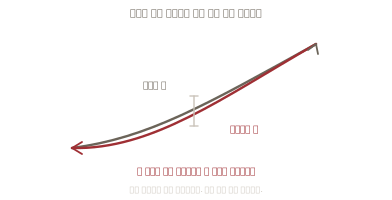
The Force That Springs Back
Elasticity is not the ability to stretch well, but the force that springs back after being pressed. This returning force lives in many places — the lungs, the arteries, the skin — and when tissue turns slack or stiff, that back-and-forth grows smaller.
The Pressed Place and the Flowing Place
How much blood actually circulates is not set by the pushing force alone. It flows in proportion to the pushing pressure minus the pressure squeezing that place. This is why one spot alone is always numb and heavy while the tests come back normal.
Inside and Outside the Vessel — The Scale That Divides Water
The water in the body sits on a scale between a force pushing it out (hydrostatic pressure) and a force holding it in (osmotic pressure, albumin). Swelling from poor nutrition is not from too much water, but from a weakened force to hold water in place.
A Sigh Is Not Laziness — It Reopens the Lungs
Before a sigh is a sign of laziness or gloom, it is the body's action of reopening the tiny air sacs that have collapsed under shallow breathing.
The Child Who Says Their Legs Hurt at Night
In the evening they say their legs hurt, and by morning they are running about. We commonly call it growing pains, but the evidence that growing taller is itself what hurts is weaker than you might think. Some children feel more pain from the same stimulus, and how much they feel shifts with how the day has gone.
The Child Who Wets the Bed in Their Sleep
Bedwetting is not a habit. The hormone that reduces urine at night, the amount the bladder holds at night, and the power to wake from sleep at the signal that the bladder is full — which of these three is not yet grown in is what makes it look different from child to child.
Vessels Do Not Narrow Just Anywhere
Some people are told their lipid levels are normal and yet one stretch of artery has thickened. Atherosclerosis does not spread evenly through a vessel; it begins where the artery branches and curves. There the flow breaks up, the wall calls immune cells over, and the macrophages inside the wall take in oxidised lipid until they reach their limit and turn into foam cells. Shear stress and the foam cell are the names for that place.
Why Blood Clots Only Where You Are Injured
Cut a fingertip and the bleeding stops. Yet the same blood, so quick to clot there, does not clot inside the vessel right beside it. The answer lies not with the clotting side but with the side that holds it back. The vessel wall keeps blood from clotting all along, and stops doing that work only where the wall is broken. And the moment clotting begins, the dissolving is already booked.
Not All Immune Cells Are Out Circulating
A raised white cell count on a blood test does not always mean infection. A good share of white cells wait close against the vessel wall, where a blood draw does not catch them, and tension or exercise sends them dropping into the flow all at once. The white cells were not newly made — the place they were standing changed.
What the Body Was Going to Throw Away Had a Use
The colour you see when a bruise turns yellow is bilirubin. It was long taken for nothing but the residue left over from clearing old red cells, and now it is read as an antioxidant the body makes for itself. The road out and the work being done lie along one line, which is why the flow of bile is not a matter of digestion alone.
Body Temperature Is Not a Number You Read but a Value You Defend
People often say their hands and feet are cold while their temperature reads normal. The thermometer shows what the body has managed to hold, and the temperature of the hands and feet shows what the body is doing to hold it. Temperature sets the pace of enzymes, and it also moves blood vessels and immune responses.