
🔋
Rest doesn't relieve my fatigue
Even after resting all weekend, Monday still feels exhausting.
The same fatigue can have different causes, and different causes call for different prescriptions. We assess your condition and design the prescription your body needs right now.
If rest no longer restores you, your body's reserves may be running low
Even after resting all weekend, Monday still feels exhausting.
You get enough hours of sleep, but mornings still feel heavy.
Your body doesn't feel like it used to, and aches keep showing up.
Colds and dips in your condition come back whenever the seasons change.
We first determine whether your fatigue stems from depletion, sluggish circulation, or problems with digestion and absorption.
We formulate around your constitution and the season. Even the same tonic is composed differently in summer and winter.
We give you specific guidance on how to take it, for how long, and which foods to avoid alongside it.
We check how your body responds while you take it and adjust the formula if needed.
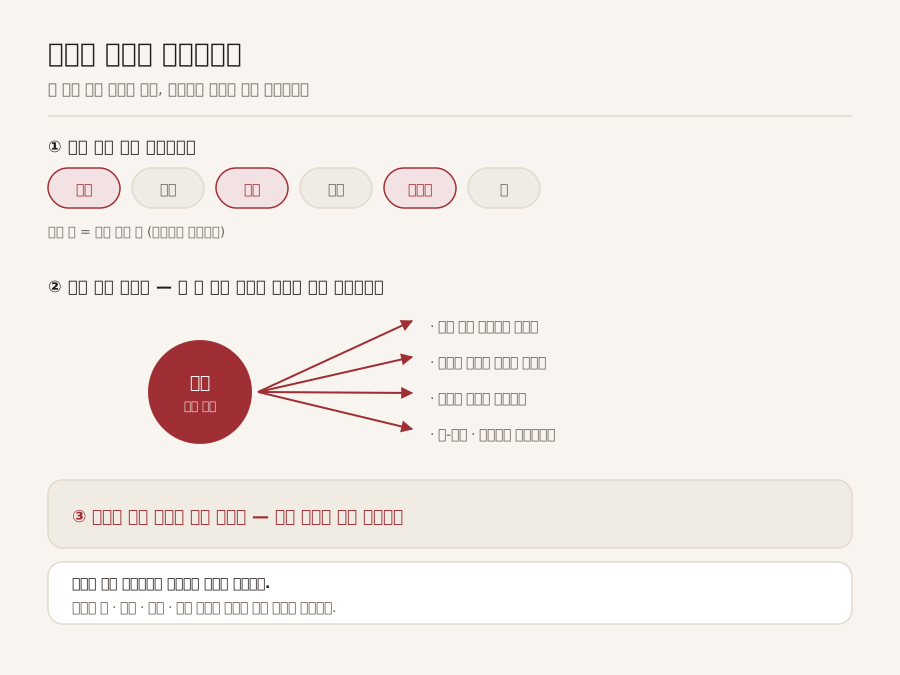
Herbal medicine aimed at treatment — such as stabilizing sleep or restoring digestion — is designed differently from tonics that replenish depleted energy. Through consultation, we start by identifying what your body actually needs right now.
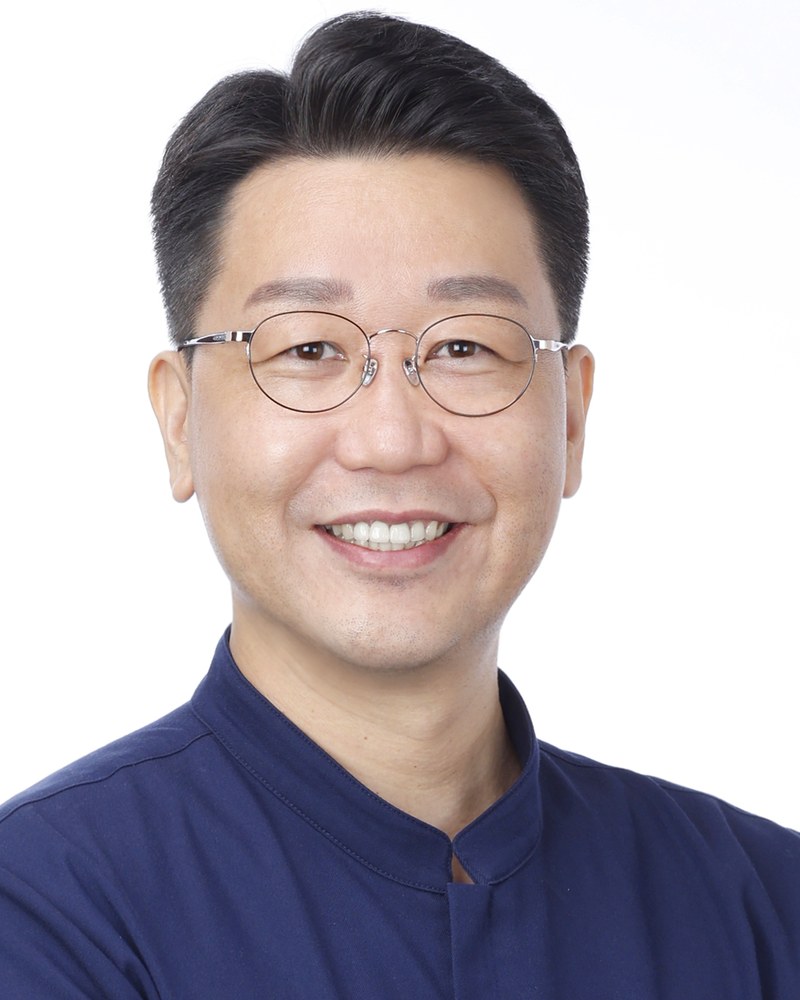
A graduate of the College of Korean Medicine at Kyung Hee University, with master's and doctoral degrees in pathology — the mechanisms of disease — from its graduate school. Later served as a research professor in the university's Herbology department, studying medicinal substances. Studying both disease and medicine from both sides is the foundation of this practice: explaining "why a given medicine works for a given illness" in the language of both pathology and pharmacology.
Explains autonomic, chronic, and intractable conditions — and structural problems of the body — in the language of modern science, and proposes treatment matched to the cause. Has taught prescribing and clinical practice to Korean medicine doctors for over ten years, and is a co-author of "Korean Medicine, Explained by Korean Medicine Doctors," selected for the 2018 Sejong Books list (general category).
A. Generally not, unless weight gain is the goal. In fact, formulas are often designed with the aim of restoring digestive and metabolic function.
A. In most cases, yes — as long as you space out the doses. Let us know what you are currently taking, and we will factor it into the prescription.
A. It depends on the goal. We usually start with a one-month course, adjust as we monitor your progress, and do not recommend taking it longer than necessary.
A. No, that is not the case. Effects and side effects generally arise from the same mechanism, at the same site — differing only in dose and duration. What makes something safe is not where it comes from, but the dose, the duration, and the condition of the person taking it. That is why we first check what medications you are currently taking and your current physical condition, and we do not recommend taking it longer than necessary.
A. Please keep pouches (liquid decoction) refrigerated. Unopened, about two weeks is generally fine; once opened, it is best to drink it the same day. Pills or powder forms should be kept somewhere cool and dry, and please watch for moisture during the summer. The most common mistake is drinking medicine that has been kept too long because it seems wasteful to throw it away — please discard anything that has gone bad.
A. Please let us know right away if you notice any change in your condition while you are taking it. That observation is what we use to adjust the next prescription. Because the prescription is reviewed every two weeks, you can simply tell us about any changes at your next visit.
Have questions?
We're here to help.
02-446-1075
Weekdays 09:30 - 20:00 / Saturday 09:30 - 13:00
Lunch Break 12:30 - 14:00 / Closed Sunday · Public Holidays
Latest blog posts from our director
Water cannot set its own direction; it follows whatever pulls it. What the body does instead is keep separate doors for water to pass through, and decide how many of those doors to open. So swelling is less a matter of having too much water than of water having left the place where it belongs.
I do not look at a lost appetite first as a matter of will or mood. Hunger is a signal that comes up when the stomach empties, so I begin with how fast the stomach is emptying.
When blood gathers at an injured place, fluid between the tissues increases. But the body is not a sack — it is a compartment, and when fluid increases the pressure rises, and that pressure in turn presses on the vessels and the lymphatics from outside. The pores are the valve that lets that pressure out.
Effects and side effects generally do not come from different places. They arise from the same site, through the same mechanism — differing only in dose and duration. That is why we do not use the phrase "safe because it comes from nature." What makes something safe is not where the medicine comes from, but the dose, the duration, and the condition of the person taking it.
Dr. Heo Ji-young holds a PhD in Korean Medicine pathology and previously served as a research professor of herbology at Kyung Hee University, studying how the components of herbal medicine act in the body. This is the standard used to decide what to prescribe, how much, and for how long.
We start by measuring blood pressure, pulse, and body temperature for everyone who visits.
If you are also considering an herbal medicine prescription, we review a questionnaire along with urine and blood sugar tests, oxygen saturation and perfusion index measured with a fingertip device, the mouth, the eyes' pupillary light response, breathing, and sympathetic nervous system response — together with a hands-on physical examination where we look, touch, and check your movement directly.
Based on what we find, we explain which part of your body is currently off balance. These checks are meant to reduce diagnostic error, rule out other underlying conditions, and prepare for any possible side effects. See the full list of what we check
For first-time patients, we often start with about one month, and review the prescription again every two weeks, because the prescription needs to change as your condition changes. Not everyone needs to take it for a long time. Because of individual variation and the many variables in each person's physiology and condition, we cannot state this in absolute terms.
"Herbal medicine does not cure disease. It only restores an environment that has tilted off balance — the actual repair work is done by the body." This is a passage from the book Dr. Heo Ji-young wrote.
Cells already have their own repair mechanisms. When the surrounding environment stays off balance, that mechanism simply cannot run properly. So instead of pressing hard on one spot, we start by finding where the conditions have tilted.
We use herbal ingredients that come with GMP certification. The water used for decoction goes through a water purifier.
Kyunghee Meerae Korean Medicine Clinic, Gwangjin is located at Room 201, 46 Jayang-ro, Gwangjin-gu, Seoul, South Korea. It is a 7-minute walk from Guui Station Exit 4. · Directions
이 홈페이지의 모든 글과 도해는 경희미르애한의원 광진점 허지영 원장이 직접 작성한 저작물이며, 저작권법의 보호를 받습니다. 출처를 밝힌 정당한 인용을 넘어서는 무단 복제·전재·재배포, 그리고 AI 학습 데이터로의 사용을 허락하지 않습니다. 위반 시 저작권법에 따른 민형사상 책임이 따를 수 있습니다.
All articles and diagrams on this site are original works written by Dr. Heo Ji-young of Kyunghee Meerae Korean Medicine Clinic, Gwangjin, and are protected under Korean copyright law. Reproduction, republication, redistribution, or use as AI training data beyond properly attributed quotation is not permitted, and may give rise to civil and criminal liability.