

🦴
Joint pain
Knees, shoulders, fingers — joints ache and feel stiff all over.
When it is not just one thing, but several areas breaking down together
Knees, shoulders, fingers — joints ache and feel stiff all over.
Long-standing pain persists and rarely eases.
You have little appetite, and even a small meal leaves you bloated.
You have trouble falling asleep, or you wake up often during the night.
You need to urinate frequently or don't feel fully relieved, and constipation or a lingering sense of incomplete bowel movements persists.
You feel weak and tire easily even with light activity.
If pain is clearly concentrated in one place, such as a knee or shoulder, the Chronic Pain Clinic may be the right fit; if insomnia or palpitations stand out, the Autonomic Nervous System Clinic may be better; if managing blood pressure, blood sugar, or weight is the priority, the Metabolic Syndrome Clinic may be more suitable. If several symptoms overlap at once — pain, digestion, sleep, and energy — the Senior Clinic looks at the whole picture together.
We start by measuring blood pressure, pulse, and body temperature for everyone who visits.
If you are also considering an herbal medicine prescription, we review a questionnaire along with urine and blood sugar tests, oxygen saturation and perfusion index measured with a fingertip device, the mouth, the eyes' pupillary light response, breathing, and sympathetic nervous system response — together with a hands-on physical examination where we look, touch, and check your movement directly.
Based on what we find, we explain which part of your body is currently off balance. These checks are meant to reduce diagnostic error, rule out other underlying conditions, and prepare for any possible side effects. See the full list of what we check
For first-time patients, we often start with about one month, and review the prescription again every two weeks, because the prescription needs to change as your condition changes. Not everyone needs to take it for a long time. Because of individual variation and the many variables in each person's physiology and condition, we cannot state this in absolute terms.
Can a body that stiffens with age be reversed?
The body doesn't age all at once
Bones age differently in different places
Why does aging show up first at the toes?
The knee only rests when fully straightened
Why fluid returns to the knee even after it's drained
Poor digestion with a tight feeling in the chest
Can a tonic be taken anytime?
Is a tonic just about adding in good things?
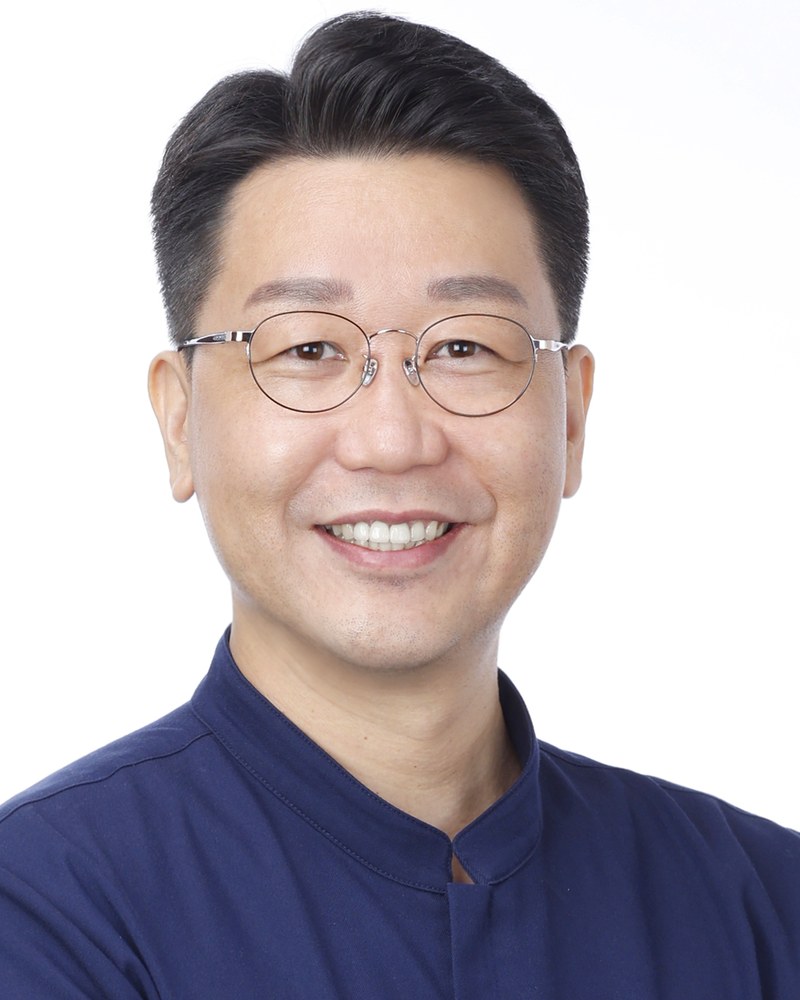
A graduate of the College of Korean Medicine at Kyung Hee University, with master's and doctoral degrees in pathology — the mechanisms of disease — from its graduate school. Later served as a research professor in the university's Herbology department, studying medicinal substances. Studying both disease and medicine from both sides is the foundation of this practice: explaining "why a given medicine works for a given illness" in the language of both pathology and pharmacology.
Explains autonomic, chronic, and intractable conditions — and structural problems of the body — in the language of modern science, and proposes treatment matched to the cause. Has taught prescribing and clinical practice to Korean medicine doctors for over ten years, and is a co-author of "Korean Medicine, Explained by Korean Medicine Doctors," selected for the 2018 Sejong Books list (general category).
A. It depends on the goal. For first-time patients, we often start with about one month, and review the prescription again every two weeks, because the prescription needs to change as your condition changes. Not everyone needs to take it for a long time, and we do not recommend taking it longer than necessary.
A. Let us know everything you are currently taking, and we will assess it together with you. Simply spacing doses by two to three hours is not always enough, so we decide based on the type of medication and your current condition.
A. No, that is not the case. Effects and side effects generally arise from the same mechanism, at the same site — differing only in dose and duration. What makes something safe is not where it comes from, but the dose, the duration, and the condition of the person taking it. That is why we first check what medications you are currently taking and your current physical condition.
A. Please refrigerate the sealed pouches. Unopened, they generally keep well for about two weeks; once opened, it is best to drink it the same day. Pills or powders should be kept somewhere cool and dry, with extra care about moisture in summer. The most common mistake is drinking medicine that has been kept too long simply because it seems wasteful to throw away — please discard anything that has spoiled.
A. Please let us know as soon as you notice any change while taking it. What you observe becomes the basis for adjusting the next prescription. Since we review the prescription again every two weeks, you can simply tell us about any changes at your next visit.
A. Generally not, unless weight gain is the specific goal. In fact, formulas are often designed by looking at where digestion and metabolism are being held up.
A. Acupuncture, moxibustion, and cupping are covered by National Health Insurance; herbal medicine and pharmacopuncture are not covered. We will go over the details before your treatment.
A. Yes. We first review your condition and tell you frankly whether Korean Medicine treatment may help. If we judge that it is unlikely to help, we will tell you so.
A. No. Depending on your condition, treatment may proceed with acupuncture alone. Herbal medicine is recommended when your regulatory reserve is significantly depleted, and the decision is made together after a full explanation.
A. Yes. However, if the numbness extends down to your foot or you notice weakness, we recommend confirmation with imaging tests first. If you have previous test results, bringing them along is helpful.
A. In the acute phase, sessions are often 2–3 times a week, then about once a week as things stabilize. We set a plan together at your first visit based on your condition.
Have questions?
We're here to help.
02-446-1075
Weekdays 09:30 - 20:00 / Saturday 09:30 - 13:00
Lunch Break 12:30 - 14:00 / Closed Sunday · Public Holidays
Kyunghee Meerae Korean Medicine Clinic, Gwangjin is located at Room 201, 46 Jayang-ro, Gwangjin-gu, Seoul, South Korea. It is a 7-minute walk from Guui Station Exit 4. · Directions
이 홈페이지의 모든 글과 도해는 경희미르애한의원 광진점 허지영 원장이 직접 작성한 저작물이며, 저작권법의 보호를 받습니다. 출처를 밝힌 정당한 인용을 넘어서는 무단 복제·전재·재배포, 그리고 AI 학습 데이터로의 사용을 허락하지 않습니다. 위반 시 저작권법에 따른 민형사상 책임이 따를 수 있습니다.
All articles and diagrams on this site are original works written by Dr. Heo Ji-young of Kyunghee Meerae Korean Medicine Clinic, Gwangjin, and are protected under Korean copyright law. Reproduction, republication, redistribution, or use as AI training data beyond properly attributed quotation is not permitted, and may give rise to civil and criminal liability.