
Health Blog
Written by Dr. Heo Ji-young. Each piece takes a single symptom and follows what is actually happening in the body.
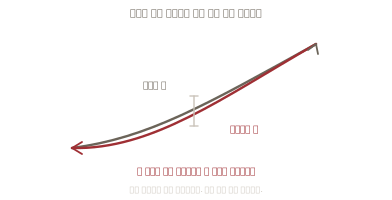
The Force That Springs Back
Elasticity is not the ability to stretch well, but the force that springs back after being pressed. This returning force lives in many places — the lungs, the arteries, the skin — and when tissue turns slack or stiff, that back-and-forth grows smaller.
Standing Still Is Work
A person takes gravity lengthwise. That weight is not held up by bone alone standing like a column — what pulls and what resists are woven together, a structure called tensegrity. And that weave carries on into the inside of the cell.
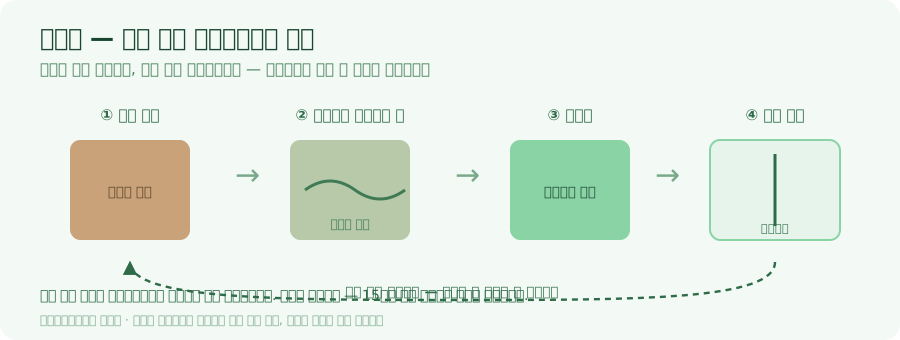
Chuna That Does Not Crack Bones — The Principle of Thixotropic Chuna
Does Chuna have to crack my bones? This approach uses gentle, sustained input rather than a forceful thrust to temporarily reduce stiff tissue's resistance; suspected structural injury needs evaluation first.
If Only One Shoulder Keeps Seizing Up
Why does one shoulder keep tightening after it is released? Repeated one-sided habits and postural compensation can keep loading the same tissues.
When It Stiffens Again After Being Released
Why do I feel better during treatment but stiff again days later? Tissue resistance can change temporarily with movement and rest, so maintenance considers comfortable movement and the conditions that keep it stiff; injury signs need testing first.
If You Are Especially Stiff in the Morning — The Body Keeping to a Timetable
Why am I especially stiff when I wake up? Overnight stillness and the body's inflammatory rhythm can make mornings feel worse.
Why I Look at the Pelvis When Your Neck Hurts
Why examine my pelvis when my neck hurts? The neck may be compensating for posture and movement lower down the chain, rather than acting alone.
When Your Adjustment Keeps Coming Undone — Maintenance Is Half the Treatment
Why does my body slip back days after a correction? Released tissue can stiffen again around familiar posture, so correction and maintenance need to work together.