
🌙
Trouble falling asleep, waking often
Day after day, you wake up without feeling refreshed.
Insomnia, palpitations, dizziness, cold hands and feet — the symptoms may differ, but they can share the same underlying conditions. We start by looking at the regulatory function itself.

The tests show nothing wrong, yet your body keeps struggling
Day after day, you wake up without feeling refreshed.
The pounding and tightness in your chest continue even in a cool room.
Standing up from sitting brings dizziness, sometimes with cold sweats.
Indigestion and bloating often come along with it.
Dr. Heo Ji-young has personally experienced the symptoms that come with autonomic imbalance. Because Dr. Heo knows the frustration of that time — when test results showed nothing wrong, yet the body kept struggling — your symptoms are never brushed aside, and the first step is understanding, together, exactly what is troubling you.
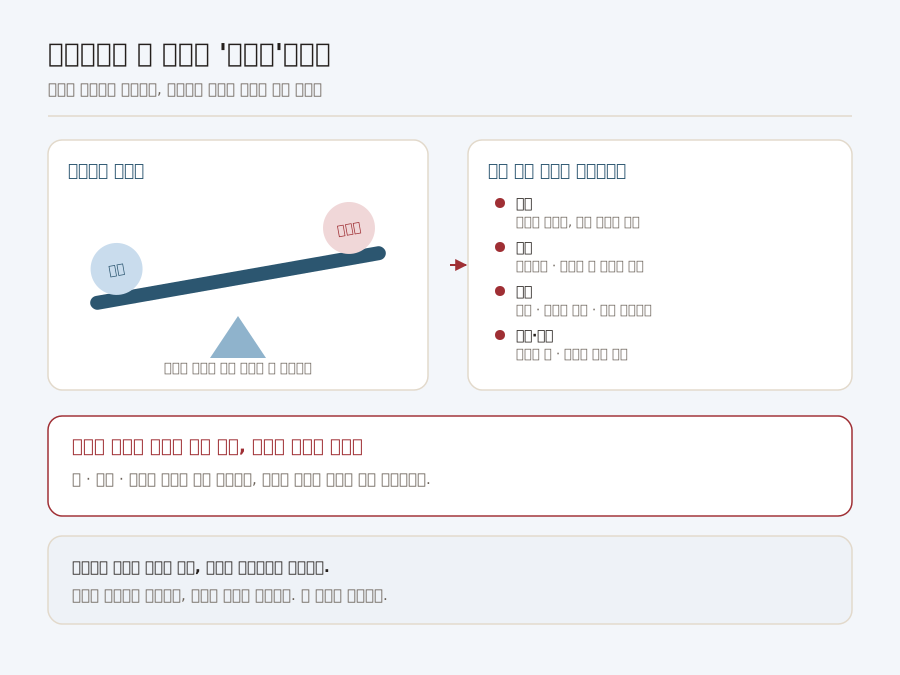
The autonomic nervous system regulates body temperature, heart rate, digestion, sleep, and blood pressure around the clock. When this regulation falters, the weakest link gives way first — which is why it shows up as different symptoms in different people. The symptoms on the surface may differ, but they can share the same underlying conditions. That is why we look at the regulatory function first, not just the symptoms.
The focus of treatment depends on your main symptoms
The parasympathetic nervous system is not activating enough for the body to shift into sleep mode
Relaxation-focused treatment
Acupuncture aimed at calming an overactive sympathetic nervous system, combined with care to help restore your sleep rhythm.
Blood pressure and heart rate regulation is not keeping up with changes in posture or emotion
Regulation-restoring treatment
Treatment aims to stabilize blood pressure and heart rate responses; when needed, we first recommend tests to rule out other causes.
The regulatory reserve that supports peripheral circulation and digestion has been depleted
Function-restoring treatment
We consider acupuncture and moxibustion to support peripheral circulation, together with personalized herbal medicine to replenish depleted regulatory reserve.
We first check for other possible causes such as thyroid conditions or anemia, and recommend tests when needed.
Acupuncture is used to calm an overactive sympathetic nervous system, working toward parasympathetic recovery.
Herbal medicine tailored to your constitution and the season helps restore depleted regulatory reserve.
We work with you on the specific lifestyle factors that affect the autonomic nervous system — sleep, air conditioning, caffeine, and more.
Watch the video to learn more about the autonomic nervous system.
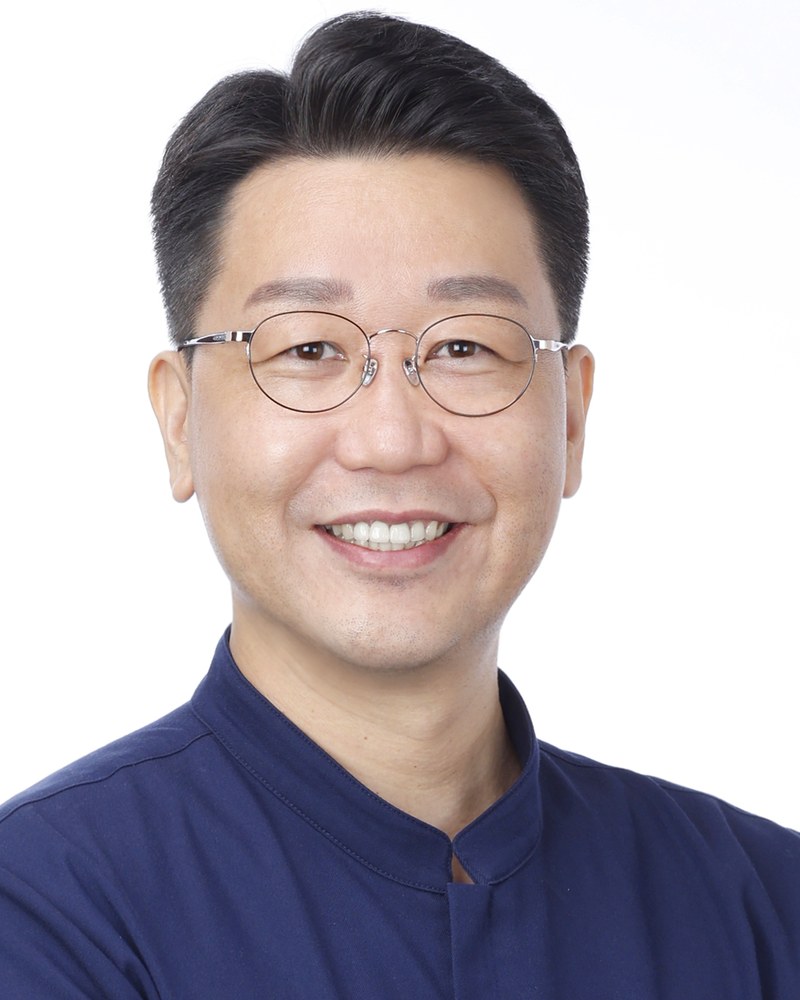
A graduate of the College of Korean Medicine at Kyung Hee University, with master's and doctoral degrees in pathology — the mechanisms of disease — from its graduate school. Later served as a research professor in the university's Herbology department, studying medicinal substances. Studying both disease and medicine from both sides is the foundation of this practice: explaining "why a given medicine works for a given illness" in the language of both pathology and pharmacology.
Explains autonomic, chronic, and intractable conditions — and structural problems of the body — in the language of modern science, and proposes treatment matched to the cause. Has taught prescribing and clinical practice to Korean medicine doctors for over ten years, and is a co-author of "Korean Medicine, Explained by Korean Medicine Doctors," selected for the 2018 Sejong Books list (general category).
A. Yes. Issues such as dizziness on standing, insomnia, and palpitations can stem from autonomic regulation problems that don't show up clearly in test results. That said, if another cause such as a thyroid condition or anemia is suspected, we recommend testing first to rule it out.
A. For first-time patients, we often start with about one month. The prescription is reviewed again every two weeks, because the prescription needs to change as your condition changes. If the autonomic issue has been long-standing, treatment can sometimes need three to six months or more — if that looks likely, we let you know upfront. Because of individual variation and the many variables in each person's physiology and condition, we cannot state this in absolute terms.
A. Yes. If you are taking any medications, please let us know at your first visit. In particular, if you are taking medication prescribed by a neurology department, we take that into account and plan for a longer treatment period. Please do not adjust your medication on your own — for any adjustments needed, we advise you to consult the doctor who prescribed it.
A. No. Depending on your condition, treatment may proceed with acupuncture alone. Herbal medicine is recommended when your regulatory reserve is significantly depleted, and the decision is made together after a full explanation.
Have questions?
We're here to help.
02-446-1075
Weekdays 09:30 - 20:00 / Saturday 09:30 - 13:00
Lunch Break 12:30 - 14:00 / Closed Sunday · Public Holidays
Latest blog posts from our director
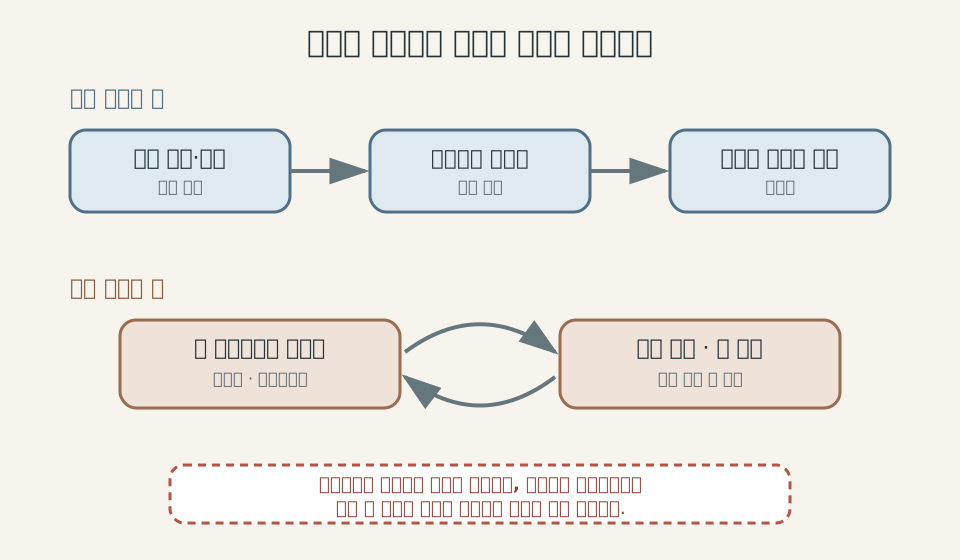
A patient comes in for a headache, and pressing on the neck changes the pain. Another comes in short of breath, yet the chest X-ray is clear. Why? Tension in the neck spreads along two branches — head pain and breathing burden. I separate the spark (sleep, meals, heat), the tight spot, and the loop itself. A sudden, severe headache, weakness, or fever calls for testing first.
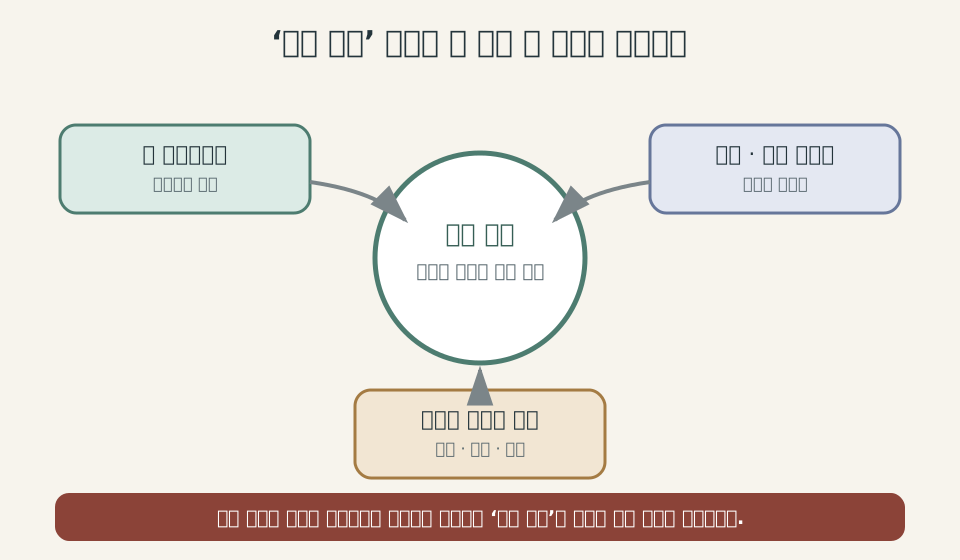
The chest X-ray is normal, the lung capacity is normal — so why does breathing still feel tight? The lungs have no muscle of their own to expand themselves, so when the rib cage does not open well, breathing feels tight regardless. I sort out which of three sites is involved: the accessory breathing muscles of the neck, pressure pushing up from the abdomen, or how well the chest wall stretches. Shortness of breath even at rest, or bluish lips, calls for testing first.
Why does the epigastrium feel so full it pushes upward, and the breath grow tight along with it, even without eating very much? When food enters, the stomach normally relaxes its wall to make room — when that ability declines, whatever comes in turns directly into pressure. I look at three layers together: the stomach wall, the abdominal wall, and the chest wall. Weight loss, black stools, or difficulty swallowing call for a stomach examination first.
We start by measuring blood pressure, pulse, and body temperature for everyone who visits.
If you are also considering an herbal medicine prescription, we review a questionnaire along with urine and blood sugar tests, oxygen saturation and perfusion index measured with a fingertip device, the mouth, the eyes' pupillary light response, breathing, and sympathetic nervous system response — together with a hands-on physical examination where we look, touch, and check your movement directly.
Based on what we find, we explain which part of your body is currently off balance. These checks are meant to reduce diagnostic error, rule out other underlying conditions, and prepare for any possible side effects. See the full list of what we check
For first-time patients, we often start with about one month, and review the prescription again every two weeks, because the prescription needs to change as your condition changes. If the autonomic issue has been long-standing, treatment can sometimes need three to six months or more — if that looks likely, we let you know upfront. Because of individual variation and the many variables in each person's physiology and condition, we cannot state this in absolute terms.
The book Dr. Heo Ji-young wrote opens with something a patient once said in the exam room: "They told me everything was normal. But I'm still in pain."
Tests look for damaged or injured tissue, while symptoms speak to the environment that tissue is sitting in. Even without any damage, the body can struggle when that environment is off balance. So a normal test result and the discomfort you are feeling right now are not at odds with each other — that is the standpoint this program starts from.
Sometimes an autonomic nervous system problem is the issue in itself, but more often it shows up when an error in the body's own process of keeping homeostasis or protecting itself ends up strongly stimulating nerve signals. That is why it does not fit neatly into a single box called "autonomic dysfunction" — it can surface as a problem in almost any area of the body.
That is why this program is organized around the suffering you are experiencing, rather than around a disease name. It is also one of the areas Dr. Heo Ji-young focuses on as a primary field of practice.
Kyunghee Meerae Korean Medicine Clinic, Gwangjin is located at Room 201, 46 Jayang-ro, Gwangjin-gu, Seoul, South Korea. It is a 7-minute walk from Guui Station Exit 4. · Directions
이 홈페이지의 모든 글과 도해는 경희미르애한의원 광진점 허지영 원장이 직접 작성한 저작물이며, 저작권법의 보호를 받습니다. 출처를 밝힌 정당한 인용을 넘어서는 무단 복제·전재·재배포, 그리고 AI 학습 데이터로의 사용을 허락하지 않습니다. 위반 시 저작권법에 따른 민형사상 책임이 따를 수 있습니다.
All articles and diagrams on this site are original works written by Dr. Heo Ji-young of Kyunghee Meerae Korean Medicine Clinic, Gwangjin, and are protected under Korean copyright law. Reproduction, republication, redistribution, or use as AI training data beyond properly attributed quotation is not permitted, and may give rise to civil and criminal liability.