
Health Blog
Written by Dr. Heo Ji-young. Each piece takes a single symptom and follows what is actually happening in the body.
The Accident Ended, But the Body Did Not
After a car accident, treatment wrapped up in a couple of months — so why, six months later, is the neck still stiff every morning? The outside healing and the inside finishing do not happen on the same schedule. The final stage of healing does not even begin until two to three weeks after the injury, and it can continue for more than a year. If new weakness or numbness appears, or the swelling and pain keep growing, get it checked first.
Tingling and Cramps Are Not Only About Muscle
Tingling, cramping — you assume it's a knotted muscle and rub it out, so why does relief only last a moment? Pain, cold, heat, and itch all travel close pathways inside the body and can swap places with one another, and the spot where tingling is felt may be where the signal arrived, not where it started. If sudden tingling appears on only one side along with slurred speech, you need to move quickly.
For Stiffness to Soften Again
Does the body being “stiff” necessarily mean something is damaged? Like a palm thickening from days of shoveling, the body reshapes whatever gets pressed, in proportion to how much it is pressed. Stiffness from reduced water content and stiffness from collagen settling into place run on different clocks — the question is which one is currently in front. If it swells and grows feverish, or keeps getting worse even with rest, get it checked first.
The Body Does Not Tilt All at Once
At a checkup, blood pressure is a little high, blood sugar is a little high, waist circumference is a little larger — and every single one gets called only "borderline." How should you read that? Looked at one at a time, everything seems ambiguous, but once several measures lean the same way, the story changes. You have to look at them side by side to see it. If your weight drops on its own, or thirst and urination increase noticeably, testing comes first.
A Time Comes When It Is Not Like Before
You eat the same amount, but your belly is getting bigger; eat even a little late and your hands shake; an hour after a meal you are too sleepy to function — has your habit gotten worse? What has changed is not the habit, but the margin the body allows for it. As muscle grows less responsive to insulin with age, what you eat starts taking a different path through the body. If your weight has dropped on its own, or thirst persists, testing comes first.
There Is a Range You Can Swing In
Two people with the same average on their checkup — one whose numbers were steady year after year, and one who arrived at that average after swinging widely up and down. Are they in the same state? The report makes them look identical, but the real question is how much they swung, and whether they returned to where they started. In records of more than 500,000 people, a difference remained even when the average was the same. If a number suddenly changed by a large amount, re-checking comes first.
Aching Like the Flu, the Morning After Drinking or a Bad Night's Sleep
There is no hint of a cold and nothing strenuous happened, so why does the whole body feel stiff and sore like the flu? Trace it back and there was usually drinking the night before, a long-skipped meal, or a restless night's sleep. On a day the metabolism has been shaken, muscle sometimes carries the cost. If fever comes with it, or urine turns the color of cola, that needs checking the same day.
Blood Pressure Rises for a Reason
When you are told your blood pressure is high, the conversation usually turns straight to what to cut back on. But there is a question to ask before that — why did the body raise the pressure in the first place? Blood pressure is the pressure that keeps the roads open so blood can reach where it needs to go, and when the reason to raise it stays in place, the body keeps it raised for as long as that reason remains. This is not a reason to stop blood pressure medication on your own — looking at the reason does not compete with the medication.
Losing Weight Is Not About Willpower
Eating less does make the weight come off — so why does it always stall and come back? What actually decides the outcome is not whether the weight comes off, but whether the body can bear the process while it does. What comes off in the first week is usually water, a body pushed too fast gives up muscle first, and gallstones showed up more often in the group that lost weight faster. If your weight has dropped on its own, without any effort, testing comes first.
When Meal Times Stay Misaligned
"I have never eaten breakfast, and nothing has ever happened. Why is it a problem now?" It is a good question. Skipping breakfast is not, in itself, a fault — what has changed is not the habit but the body that used to absorb it. The same meal is received differently by the body depending on when it is eaten. If your weight keeps dropping even though you are not skipping meals, testing comes first.
When the Back of the Neck Stiffens, the Head and Breath Follow
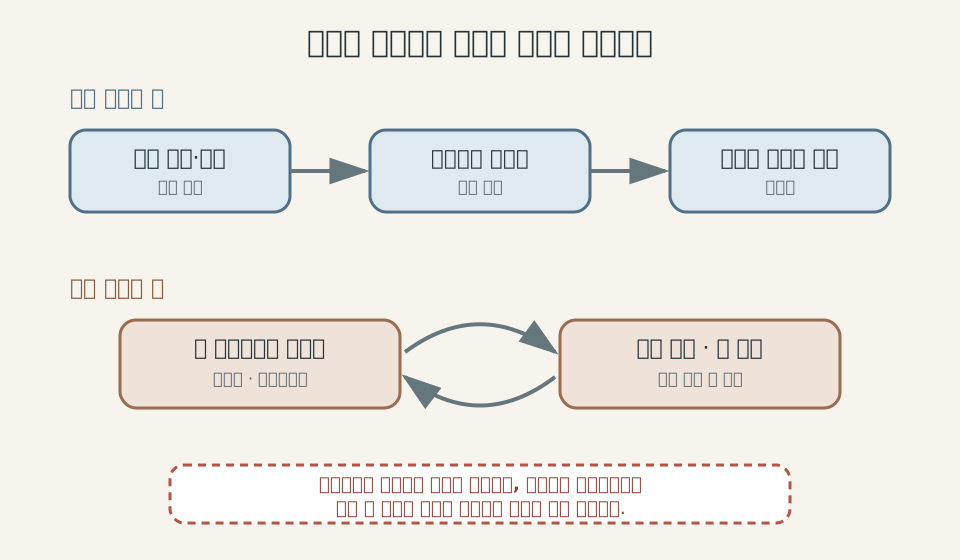
A patient comes in for a headache, and pressing on the neck changes the pain. Another comes in short of breath, yet the chest X-ray is clear. Why? Tension in the neck spreads along two branches — head pain and breathing burden. I separate the spark (sleep, meals, heat), the tight spot, and the loop itself. A sudden, severe headache, weakness, or fever calls for testing first.
My Breathing Feels Tight, but They Tell Me My Lungs Are Normal
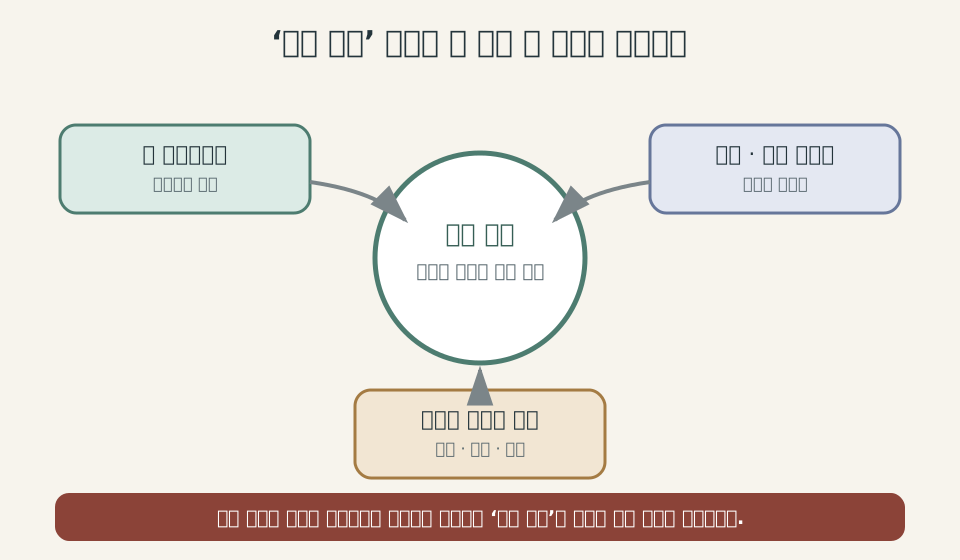
The chest X-ray is normal, the lung capacity is normal — so why does breathing still feel tight? The lungs have no muscle of their own to expand themselves, so when the rib cage does not open well, breathing feels tight regardless. I sort out which of three sites is involved: the accessory breathing muscles of the neck, pressure pushing up from the abdomen, or how well the chest wall stretches. Shortness of breath even at rest, or bluish lips, calls for testing first.