
🩻
Tests look normal, but your body feels heavy
You were told your bones are fine, yet stiffness and pain continue.
Your treatment can be covered by auto insurance. We guide you along the way — from filing the claim and handling the insurance paperwork to deciding when you are ready to return to work.
Symptoms you did not notice right after the accident can begin days later
You were told your bones are fine, yet stiffness and pain continue.
Your neck and back begin to hurt two to three days after the accident, more than on the day itself.
Ankles, knees, or the pelvis can feel uncomfortable even without a direct impact.
You wake up from pain during sleep or feel stiffer in the morning.
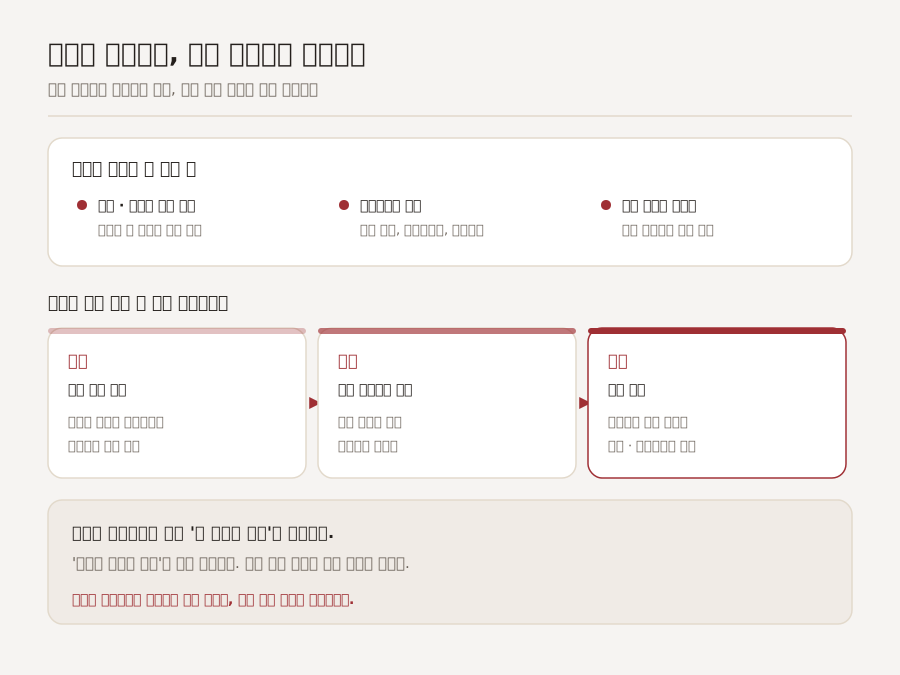
The aftereffects of a traffic accident can be covered by auto insurance. Even areas that took no direct hit can be covered once their connection to the accident is confirmed. Just bring your insurer's claim number, and we will walk you through the paperwork.
We examine the whole structure along the paths the impact travels — pelvis to knee to ankle, and neck to shoulder.
We prioritize treatment that settles the inflammation and pain in the injured areas.
Acupuncture, pharmacopuncture, and Chuna (Korean manual therapy) are used to restore disrupted balance and release stiffened tissue.
Using concrete benchmarks — how long you can stay seated, how far you can walk — we decide together when you are ready to return to work.
We care for the wide range of aftereffects that can follow an accident
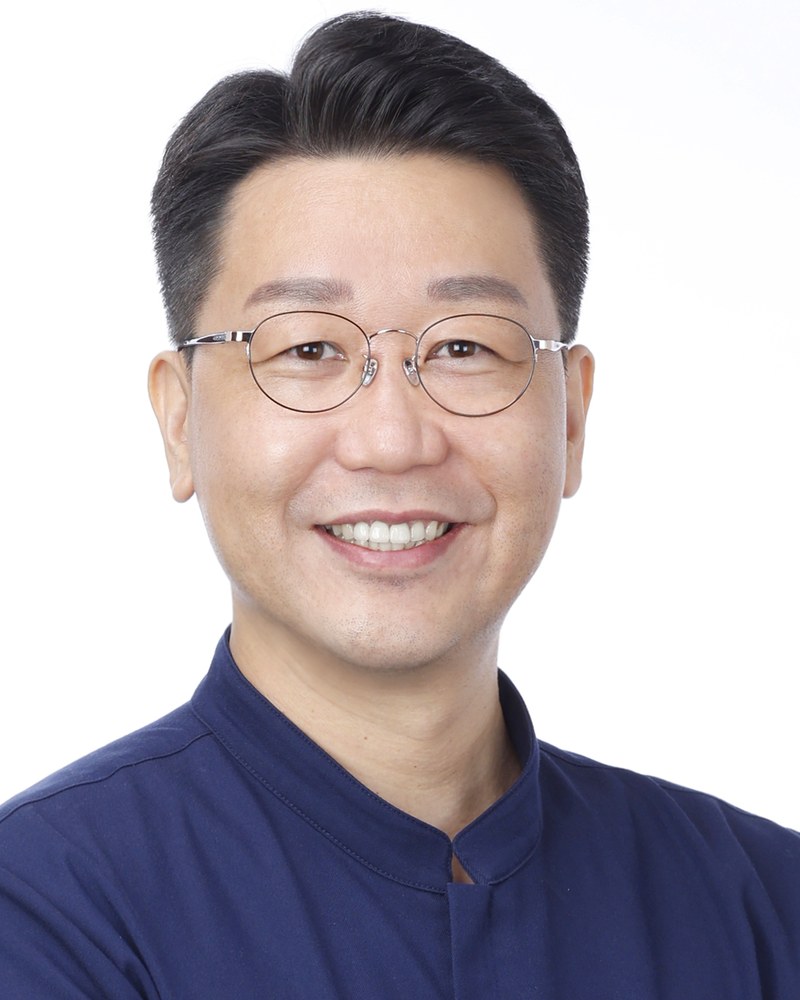
A graduate of the College of Korean Medicine at Kyung Hee University, with master's and doctoral degrees in pathology — the mechanisms of disease — from its graduate school. Later served as a research professor in the university's Herbology department, studying medicinal substances. Studying both disease and medicine from both sides is the foundation of this practice: explaining "why a given medicine works for a given illness" in the language of both pathology and pharmacology.
Explains autonomic, chronic, and intractable conditions — and structural problems of the body — in the language of modern science, and proposes treatment matched to the cause. Has taught prescribing and clinical practice to Korean medicine doctors for over ten years, and is a co-author of "Korean Medicine, Explained by Korean Medicine Doctors," selected for the 2018 Sejong Books list (general category).
A. In most cases handled through auto insurance (a bodily-injury claim), treatment can be provided with no out-of-pocket cost. Bring your claim number and we will check for you.
A. Yes. Damage and tension in muscles and ligaments often do not show up on imaging. We assess your symptoms and body structure together to build a treatment plan.
A. It varies with the extent of the injury, but it typically ranges from a few weeks to several months. We do not end treatment the moment the pain eases — we also confirm that function has recovered.
A. We review benchmarks together — sitting for 30 minutes or more, walking 20 minutes on level ground, whether pain wakes you at night — and decide the timing of your return. After you are back, treatment can continue around your schedule, using morning or lunchtime visits.
Have questions?
We're here to help.
02-446-1075
Weekdays 09:30 - 20:00 / Saturday 09:30 - 13:00
Lunch Break 12:30 - 14:00 / Closed Sunday · Public Holidays
Latest blog posts from our director
New leg tingling, numbness, or weakness after an accident should not be dismissed as ordinary muscle pain. If it is progressing or occurs with changes in urination or bowel control, emergency spinal assessment comes first.
Headache and dizziness after an accident may occur with neck pain, but they must first be separated from concussion and signs of a more serious head injury. Delayed or worsening changes should not be missed.
After a car accident, treatment wrapped up in a couple of months — so why, six months later, is the neck still stiff every morning? The outside healing and the inside finishing do not happen on the same schedule. The final stage of healing does not even begin until two to three weeks after the injury, and it can continue for more than a year. If new weakness or numbness appears, or the swelling and pain keep growing, get it checked first.
We start by measuring blood pressure, pulse, and body temperature for everyone who visits.
If you are also considering an herbal medicine prescription, we review a questionnaire along with urine and blood sugar tests, oxygen saturation and perfusion index measured with a fingertip device, the mouth, the eyes' pupillary light response, breathing, and sympathetic nervous system response — together with a hands-on physical examination where we look, touch, and check your movement directly.
Based on what we find, we explain which part of your body is currently off balance. These checks are meant to reduce diagnostic error, rule out other underlying conditions, and prepare for any possible side effects. See the full list of what we check
For first-time patients, we often start with about one month and reassess as your recovery progresses. We do not end treatment the moment the pain eases — we also confirm that function has recovered. Because of individual variation and the many variables in each person's physiology and condition, we cannot state this in absolute terms.
The body does not work like a machine that uses bones as levers. It moves as a structure where tension spreads across a whole network to keep balance. Pull on one point, and a distant point moves along with it.
That is why it is not unusual for an ankle, knee, or pelvis that was not directly hit in the accident to start feeling uncomfortable days later. So instead of only looking at the point of impact, we check along the whole connected chain the impact traveled through. This is the structural medicine perspective Dr. Heo Ji-young uses alongside diagnosis and treatment.
Kyunghee Meerae Korean Medicine Clinic, Gwangjin is located at Room 201, 46 Jayang-ro, Gwangjin-gu, Seoul, South Korea. It is a 7-minute walk from Guui Station Exit 4. · Directions
이 홈페이지의 모든 글과 도해는 경희미르애한의원 광진점 허지영 원장이 직접 작성한 저작물이며, 저작권법의 보호를 받습니다. 출처를 밝힌 정당한 인용을 넘어서는 무단 복제·전재·재배포, 그리고 AI 학습 데이터로의 사용을 허락하지 않습니다. 위반 시 저작권법에 따른 민형사상 책임이 따를 수 있습니다.
All articles and diagrams on this site are original works written by Dr. Heo Ji-young of Kyunghee Meerae Korean Medicine Clinic, Gwangjin, and are protected under Korean copyright law. Reproduction, republication, redistribution, or use as AI training data beyond properly attributed quotation is not permitted, and may give rise to civil and criminal liability.