
📋
You have a diagnosis, but no improvement
You keep up with treatment, yet daily life remains just as hard.
If you have already been through several clinics and hospitals, we will give you a frank assessment of what may help at this point. A Korean Medicine doctor trained in pathology re-examines your condition from its underlying mechanisms and works with you to set a realistic next step.

Rather than struggling alone, it may be time to look for a helpful direction together
You keep up with treatment, yet daily life remains just as hard.
Each place explains things differently, and it is hard to know what is right.
Tests and prescriptions keep repeating, but explanations of the cause have been scarce.
There is no clear guidance on what to avoid and what to do.
Drawing on a background researching disease mechanisms at Kyung Hee University's College of Korean Medicine, we identify and explain in concrete terms where Korean Medicine treatment can actually help in your current condition. Neither vague hope nor premature resignation — setting an evidence-based direction together is where we begin.
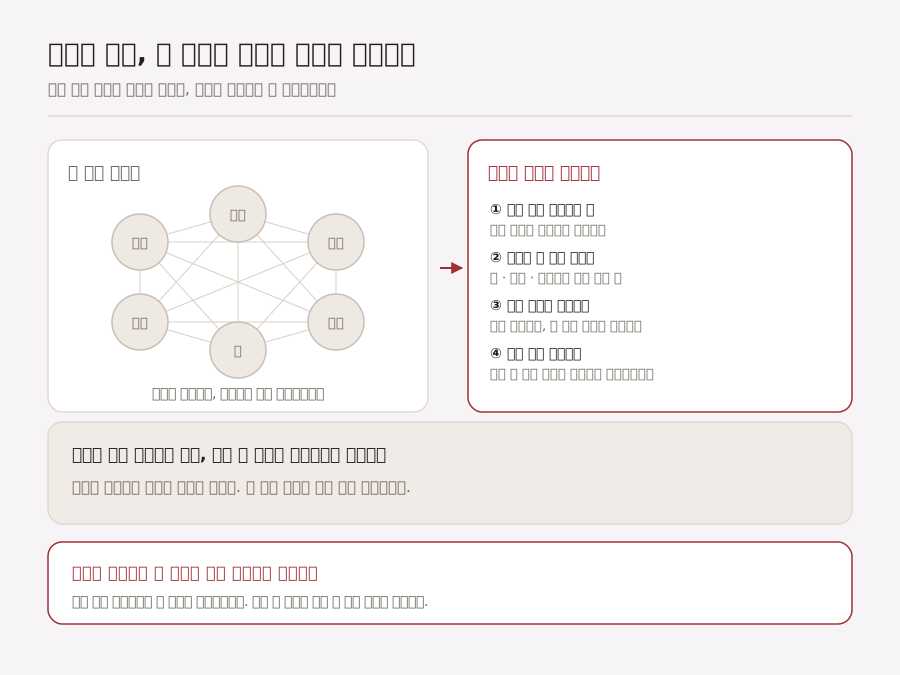
With difficult-to-treat conditions, looking only at today's symptoms rarely reveals an answer. I retrace the entire path your illness has taken — in what order it progressed, where the body's regulation broke down, and what accumulated on top of that. Even under the same diagnosis, no two people have walked the same path.
Bring your previous test results and treatment records, and we go through them together from the beginning.
We look at your current condition again through the lens of pathology and explain it in language you can understand.
We point out specifically where Korean Medicine treatment may help and set realistic goals together.
We confirm small changes first and adjust the direction as your progress unfolds.
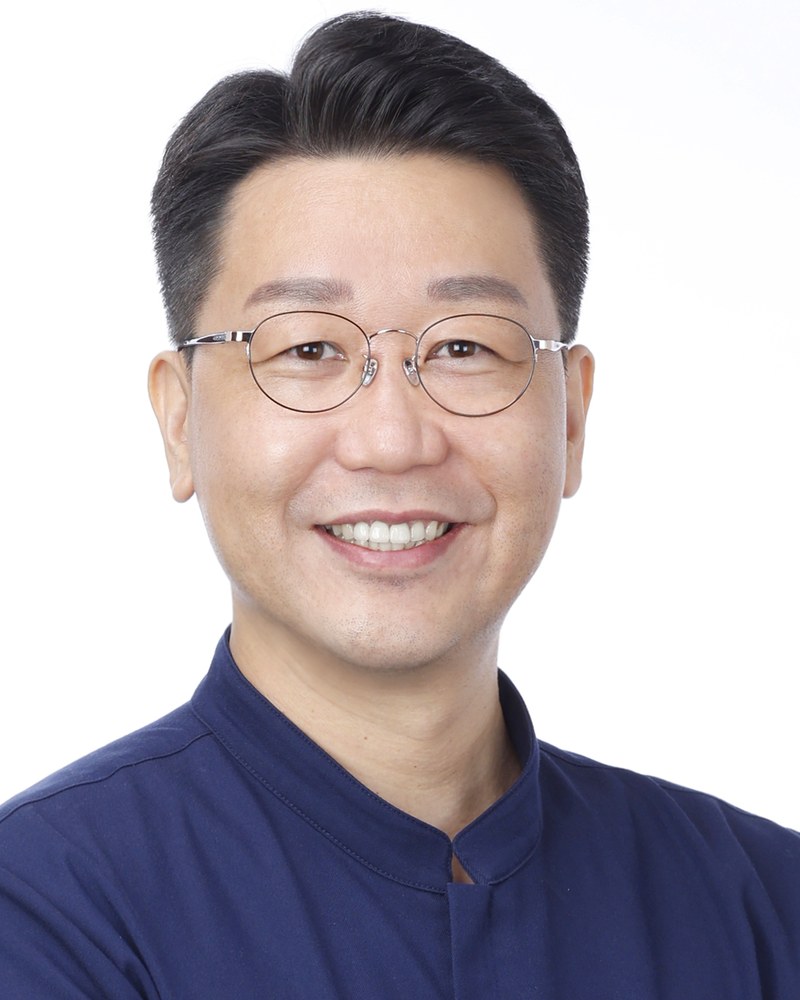
A graduate of the College of Korean Medicine at Kyung Hee University, with master's and doctoral degrees in pathology — the mechanisms of disease — from its graduate school. Later served as a research professor in the university's Herbology department, studying medicinal substances. Studying both disease and medicine from both sides is the foundation of this practice: explaining "why a given medicine works for a given illness" in the language of both pathology and pharmacology.
Explains autonomic, chronic, and intractable conditions — and structural problems of the body — in the language of modern science, and proposes treatment matched to the cause. Has taught prescribing and clinical practice to Korean medicine doctors for over ten years, and is a co-author of "Korean Medicine, Explained by Korean Medicine Doctors," selected for the 2018 Sejong Books list (general category).
A. If a chronic condition has been slow to improve despite long-term treatment, or you have never received a full explanation of its cause, we recommend a consultation. It helps to bring your previous test results and a list of your current medications.
A. It depends on the condition and your current state. Rather than promising a cure, we tell you frankly what can realistically improve from where you are now, and set achievable goals together — such as symptom relief and regaining daily function. We share your progress at every stage, and if we judge that it is unlikely to help, we will tell you so.
A. No. Our principle is to work alongside your existing treatment, and if any adjustment seems needed, we will guide you to discuss it with your attending physician.
A. Yes. We first review your condition and tell you frankly whether Korean Medicine treatment may help. If we judge that it is unlikely to help, we will tell you so.
Have questions?
We're here to help.
02-446-1075
Weekdays 09:30 - 20:00 / Saturday 09:30 - 13:00
Lunch Break 12:30 - 14:00 / Closed Sunday · Public Holidays
Latest blog posts from our director
The splinter came out on the first day, so why does it take a few more days for the spot to settle down? The word “settling” actually covers two different paths — pressing down on what has been switched on, and the body sending a separate signal to bring things to a close. If what could not be cleared away is left behind, it becomes an alarm again, running on at low intensity for a long time. If fever continues, or a joint is swollen and inflammatory markers are high, testing to find the cause comes first.
It flares up two or three times a year — but do those two or three times really come at random? For some, it is around when the first cold wind blows; for others, it is near the end of the monsoon; for others, it is three or four days after a stretch of packed workweeks. There is a pattern that does not show up in a single episode but only becomes visible after several — and the one to compare against is not someone else, but yourself last time. If it comes in a different shape than usual, checking comes before establishing a pattern.
The normal range is an interval cut from the middle 95% of healthy people. That's why kidney function can drop by half and still register as 'normal.' Tests look at items. And the place where you are struggling may be not an item but a chain formed by stringing items together.
We start by measuring blood pressure, pulse, and body temperature for everyone who visits.
If you are also considering an herbal medicine prescription, we review a questionnaire along with urine and blood sugar tests, oxygen saturation and perfusion index measured with a fingertip device, the mouth, the eyes' pupillary light response, breathing, and sympathetic nervous system response — together with a hands-on physical examination where we look, touch, and check your movement directly.
Based on what we find, we explain which part of your body is currently off balance. These checks are meant to reduce diagnostic error, rule out other underlying conditions, and prepare for any possible side effects. See the full list of what we check
For first-time patients, we often start with about one month, and review the prescription again every two weeks. If it looks like treatment will take longer, we let you know that upfront. Because of individual variation and the many variables in each person's physiology and condition, we cannot state this in absolute terms.
"It is not about whether it is Western medicine or herbal medicine — what matters is a patient's recovery of daily life and a return to normal functioning." This is the standard Dr. Heo Ji-young holds to.
For someone who has already been through many other places, what is needed is not deciding which side is right. It is an honest conversation about what can realistically be restored in daily life right now, and what is difficult. Continuing your existing treatment is the standard approach here — this is not framed as a competition between approaches.
Kyunghee Meerae Korean Medicine Clinic, Gwangjin is located at Room 201, 46 Jayang-ro, Gwangjin-gu, Seoul, South Korea. It is a 7-minute walk from Guui Station Exit 4. · Directions
이 홈페이지의 모든 글과 도해는 경희미르애한의원 광진점 허지영 원장이 직접 작성한 저작물이며, 저작권법의 보호를 받습니다. 출처를 밝힌 정당한 인용을 넘어서는 무단 복제·전재·재배포, 그리고 AI 학습 데이터로의 사용을 허락하지 않습니다. 위반 시 저작권법에 따른 민형사상 책임이 따를 수 있습니다.
All articles and diagrams on this site are original works written by Dr. Heo Ji-young of Kyunghee Meerae Korean Medicine Clinic, Gwangjin, and are protected under Korean copyright law. Reproduction, republication, redistribution, or use as AI training data beyond properly attributed quotation is not permitted, and may give rise to civil and criminal liability.