
For Stiffness to Soften Again
The short answer
Does the body being “stiff” necessarily mean something is damaged? Like a palm thickening from days of shoveling, the body reshapes whatever gets pressed, in proportion to how much it is pressed. Stiffness from reduced water content and stiffness from collagen settling into place run on different clocks — the question is which one is currently in front. If it swells and grows feverish, or keeps getting worse even with rest, get it checked first.
Contents
Shovel for a few days and the spot on your palm where you grip the handle thickens. After a few weeks it gets fairly firm, and once you stop the work it thins out again over months.
No one calls this a damaged hand. It is simply the body reshaping a pressed spot, in proportion to how much it was pressed.
Something similar happens inside the body. But because what happens on the inside is not visible, hearing that something has "stiffened" is usually taken to mean it has been damaged.
A compressed spot changes its very nature
Tendons mostly bear pulling force. But along a tendon's path there are places that do not only get pulled. These are the places where a tendon wraps around a bone, and the places where it attaches to bone. Here, instead of pulling force, compressive force is applied.
The tendon in that spot grows differently from the rest. It changes into a tissue called fibrocartilage. As the name suggests, it is a tissue that carries the properties of both tendon and cartilage together, producing substances that draw in water and using that water to absorb compressive force. This happens only at spots under compression.
This is not something going wrong. That spot is simply built to hold up that way.
And this kind of change does not happen overnight. As the force on that spot changes, the tissue slowly changes to match it. As with the palm, it takes time.
In an open space, this is a non-event
In a broadly open space, tissue can thicken a little and still have room to shift aside. It thickens, and that is the end of it.
But the body has several narrow passages formed together by bone and ligament, and tendons slide through the inside of these. Here, thickening by the same amount leaves no room to shift aside. The passage and what runs through it fall out of proportion, and it catches every time it passes through.
How much something has changed is not, by itself, what decides the outcome. Where that tissue sits matters just as much. The same change can go unnoticed for a long time in one location and become a problem early in another.
This holds even within one person's own body. There can be several spots bearing similar force, yet only one of them causes trouble. That one spot is not troublesome because it is unusually weak — it is because that spot has no room to spare.
First clear away, then fill in, then build up
The process by which a damaged spot heals is not a single block of time. There is a sequence to it.
The first few days are spent clearing away. Damaged fragments are removed, and the cells that will do the work are called in.
Next comes filling in. New cells increase and new blood vessels grow. This takes several weeks. The more extensive the damage, the longer it takes.
Two things happen alongside this filling-in stage. Some of the new cells pull the open gap inward and close it, while the space between is filled in with collagen. As the work nears its end, the cells that have done as much work as needed withdraw on their own (apoptosis).
Up to here is the repair. But the spot that has finished repairing is narrower by however much it was pulled together, and stiffer by however much collagen has piled up.
What water does and what collagen does are different
So even where the same spot feels stiff, what is driving it can differ.
In one kind, the tissue's water content (hydration) and the slickness at contacting surfaces (interfacial lubrication) are driving it. Either the water that should be between the tissues has decreased, or the condition of the surfaces sliding against each other has changed. This side still has room to give. Water can come back in, and the condition of the sliding surfaces can change again as well.
Where accumulated collagen is driving it, this is not so. It has already settled into place and taken hold, so it does not soften over a matter of days or weeks. This side runs on an entirely different timescale.
Being long-standing does not mean the earlier stage is gone
A spot that has been stiff for a long time does not mean everything has already turned to accumulation.
Even in a spot that has been stiff for a long time, the share carried by water and by the sliding surfaces remains, and moves on its own terms. Conversely, even in a spot injured only recently, some accumulation has already begun. Both can be present in the same spot at once.
And the two move in tandem. The longer the water-and-surface side stays poor, the more readily the other side accumulates, and once that other side has settled in, the water-and-surface side has a harder time returning to how it was.
So this is not a question of whether it will come back or not. What needs to be asked is which side is currently in front at this spot. When what is in front shifts, what you experience at the same spot changes along with it.
Still, not everything that feels stiff to you falls within these stages. If it swells and grows feverish, or keeps getting worse even during rest, the answer is not to work out which stage you are in — it is to get a test that finds the cause.
There are several stages to stiffening, and each stage leaves a different amount of room. Some of it is a change made to match compressive force. Some of it is stiffness from reduced water. Some of it is stiffness from accumulation that has settled into place.
What conditions is that tissue under right now. Being stiff is not one single state either. It can be a stage still passing through, or it can already be settled in. The principle behind Chuna manipulation that does not force bones discussed how this property is used in treatment.
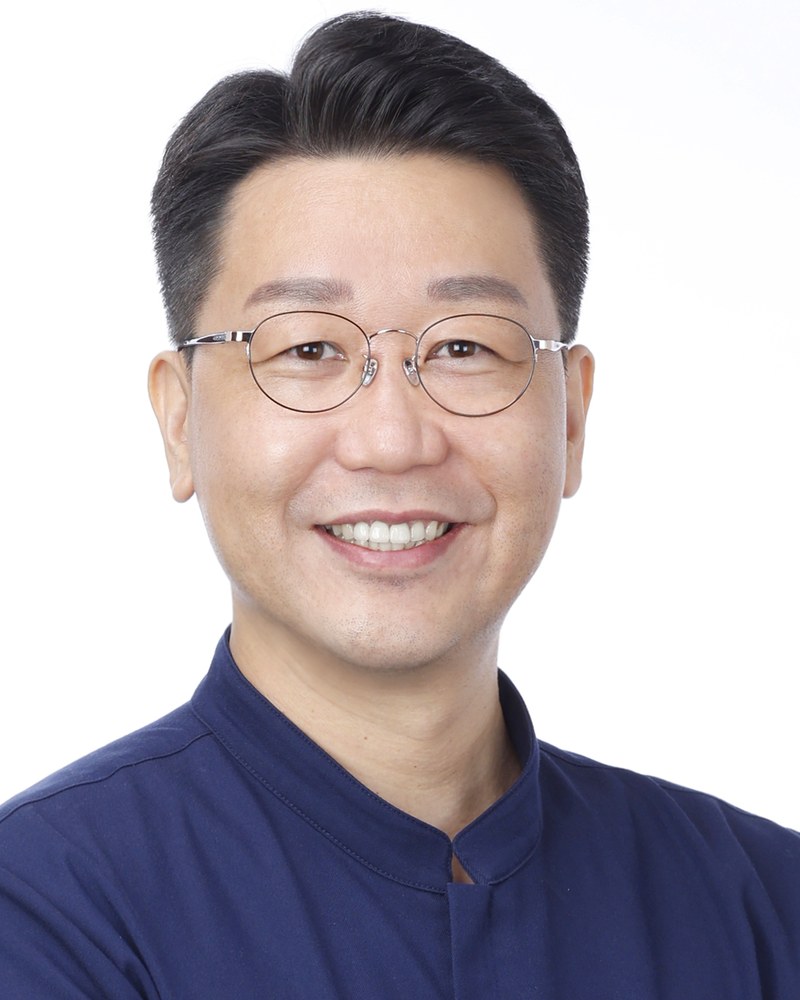
Written by Dr. Heo Ji-young (PhD in Korean Medicine Pathology, Kyung Hee University · former Research Professor of Herbology, Kyung Hee University)
IF YOU NEED CARE
Have a symptom that's been on your mind?
Choose a time on Naver, or send your concerns before your first visit.