
😰
Cracking-style adjustments scare me
You want postural correction, but the thought of forceful manipulation has kept you putting it off.
A Chuna approach that uses the natural softening property of connective and soft tissue (thixotropy) to release stiffened tissue without forceful manipulation.
Problems with posture and body structure can be a hidden source of pain
You want postural correction, but the thought of forceful manipulation has kept you putting it off.
It feels better at the time, but before long everything goes back to the way it was.
Your shoulders or pelvis look uneven from side to side.
The way you sit and walk seems connected to your pain.
Just as a set gel softens when stirred slowly, the connective tissue and fascia in our bodies also soften when given steady stimulation. Thixotropic Chuna uses this property — sustained, gentle pressure instead of a sudden cracking force — to release stiffened tissue. Because balance is restored while the tissue is in this softened state, it places less strain on the body.
We check pelvic and spinal alignment and left-right balance, and explain how they relate to your pain.
We locate stiffened connective tissue and fascia by hand and assess their condition.
Using sustained, gentle pressure, we release the stiffened tissue while correcting alignment.
We give you specific guidance on posture habits and exercises to help the corrected alignment hold.
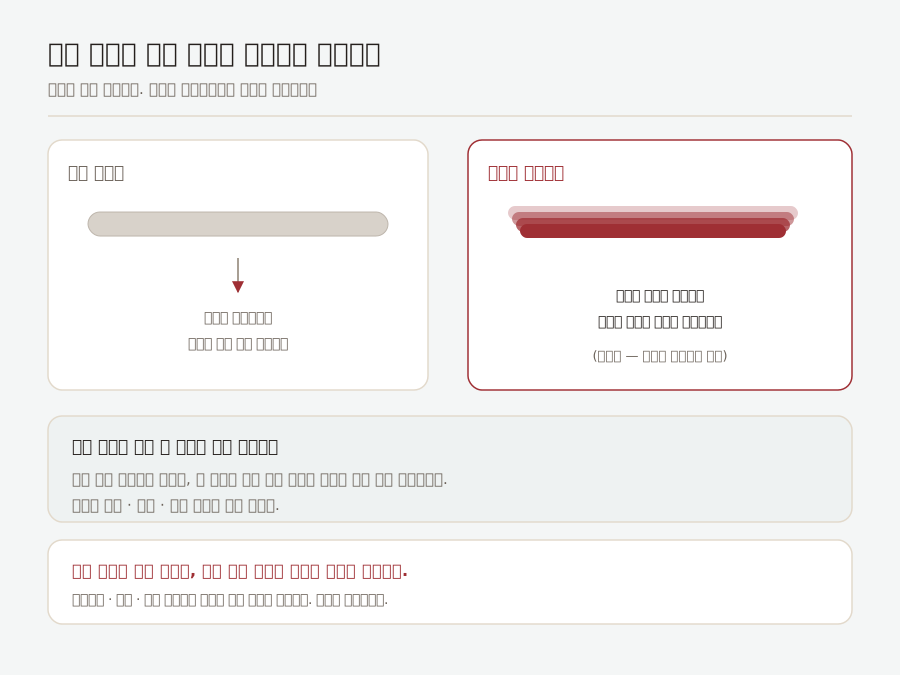
Is the popping sound during Chuna treatment something to worry about?
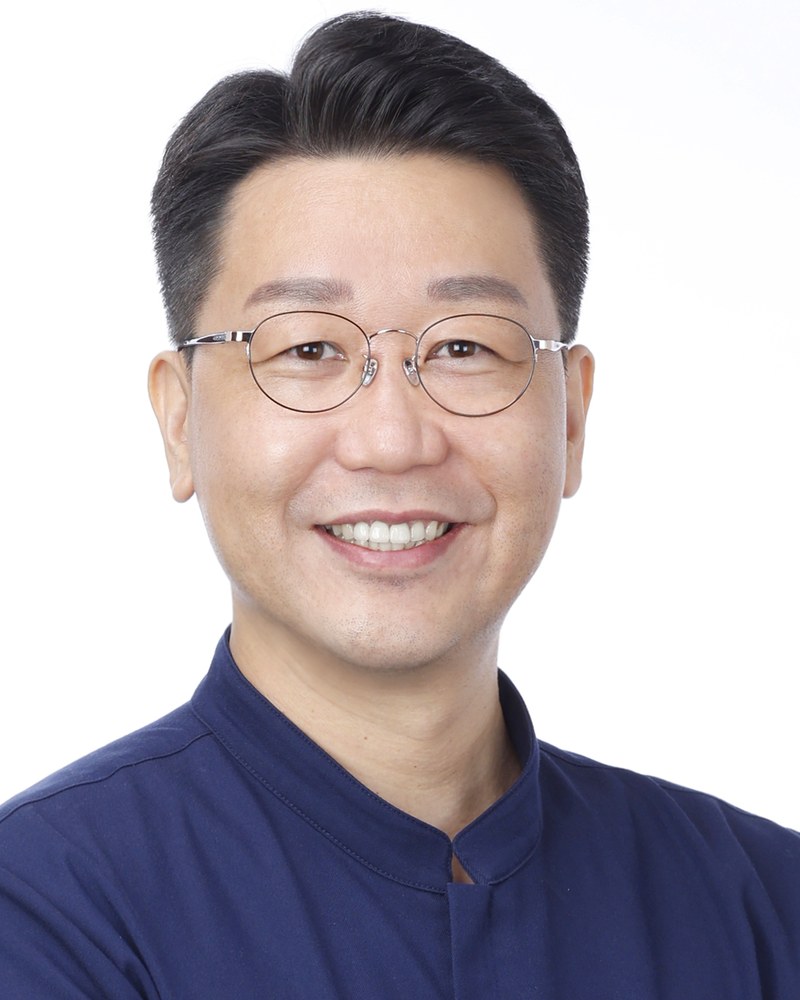
A graduate of the College of Korean Medicine at Kyung Hee University, with master's and doctoral degrees in pathology — the mechanisms of disease — from its graduate school. Later served as a research professor in the university's Herbology department, studying medicinal substances. Studying both disease and medicine from both sides is the foundation of this practice: explaining "why a given medicine works for a given illness" in the language of both pathology and pharmacology.
Explains autonomic, chronic, and intractable conditions — and structural problems of the body — in the language of modern science, and proposes treatment matched to the cause. Has taught prescribing and clinical practice to Korean medicine doctors for over ten years, and is a co-author of "Korean Medicine, Explained by Korean Medicine Doctors," selected for the 2018 Sejong Books list (general category).
A. Because it uses sustained, gentle pressure rather than sudden cracking movements, it tends to be relatively comfortable. If you feel any discomfort during treatment, let us know right away and we will adjust the intensity.
A. No. The sound is simply gas bubbles releasing inside the joint and has nothing to do with whether the correction worked. Thixotropic Chuna is guided by changes in tissue condition, not by sound.
A. It varies by body type and symptoms. After a postural analysis at your first visit, we will give you an estimated number of sessions, along with a maintenance schedule after correction.
A. Thixotropic Chuna is one part of how we assess and treat your structure during your visit, and it is not billed separately. Acupuncture, moxibustion, and cupping are covered by National Health Insurance; we will explain your exact out-of-pocket cost before your treatment.
Have questions?
We're here to help.
02-446-1075
Weekdays 09:30 - 20:00 / Saturday 09:30 - 13:00
Lunch Break 12:30 - 14:00 / Closed Sunday · Public Holidays
Latest blog posts from our director
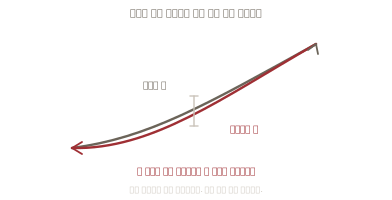
Elasticity is not the ability to stretch well, but the force that springs back after being pressed. This returning force lives in many places — the lungs, the arteries, the skin — and when tissue turns slack or stiff, that back-and-forth grows smaller.
A person takes gravity lengthwise. That weight is not held up by bone alone standing like a column — what pulls and what resists are woven together, a structure called tensegrity. And that weave carries on into the inside of the cell.
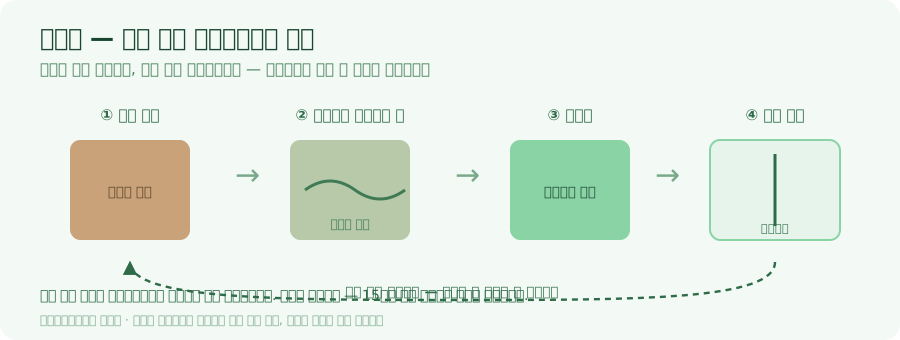
Does Chuna have to crack my bones? This approach uses gentle, sustained input rather than a forceful thrust to temporarily reduce stiff tissue's resistance; suspected structural injury needs evaluation first.
We start by measuring blood pressure, pulse, and body temperature for everyone who visits.
If you are also considering an herbal medicine prescription, we review a questionnaire along with urine and blood sugar tests, oxygen saturation and perfusion index measured with a fingertip device, the mouth, the eyes' pupillary light response, breathing, and sympathetic nervous system response — together with a hands-on physical examination where we look, touch, and check your movement directly.
Based on what we find, we explain which part of your body is currently off balance. These checks are meant to reduce diagnostic error, rule out other underlying conditions, and prepare for any possible side effects. See the full list of what we check
For first-time patients, we often start with about one month, and reassess as your progress unfolds. Because of individual variation and the many variables in each person's physiology and condition, we cannot state this in absolute terms.
What Dr. Heo Ji-young places importance on in diagnosis and clinical work is tensegrity and structural medicine. The body is not viewed as a machine that uses bones as levers, but as a structure where tension spreads across a whole network to keep balance. Pull on one point, and a distant point moves along with it.
Thixotropic chuna manipulation is used within that framework — both as part of diagnosis and, in part, as part of treatment. It is not a separately sold procedure, and we do not charge for it separately.
Kyunghee Meerae Korean Medicine Clinic, Gwangjin is located at Room 201, 46 Jayang-ro, Gwangjin-gu, Seoul, South Korea. It is a 7-minute walk from Guui Station Exit 4. · Directions
이 홈페이지의 모든 글과 도해는 경희미르애한의원 광진점 허지영 원장이 직접 작성한 저작물이며, 저작권법의 보호를 받습니다. 출처를 밝힌 정당한 인용을 넘어서는 무단 복제·전재·재배포, 그리고 AI 학습 데이터로의 사용을 허락하지 않습니다. 위반 시 저작권법에 따른 민형사상 책임이 따를 수 있습니다.
All articles and diagrams on this site are original works written by Dr. Heo Ji-young of Kyunghee Meerae Korean Medicine Clinic, Gwangjin, and are protected under Korean copyright law. Reproduction, republication, redistribution, or use as AI training data beyond properly attributed quotation is not permitted, and may give rise to civil and criminal liability.