
Is Korean Medicine Science? — Explaining Herbal Medicine Through Compounds, Blood Flow, and Microbes
The short answer
How does herbal medicine work in the body? Its compounds may act through different routes involving circulation, nerves, fluids, and gut-microbe metabolism, so responses can vary with a person's condition.
Contents
Have you ever been given a proper explanation of why herbal medicine works in the body?Many people only ever encounter herbal medicine through phrases like "it tonifies your energy" or "it warms the body." Those expressions are not wrong, but I want to go one step further and explainwhat herbal medicine actually does inside the body — how its compounds act, how they change blood flow and pressure, and where they are absorbed — in the language of modern physiology and pharmacology. This article lays out that view.
Herbal medicine is not a single drug, but a bundle of compounds
A single herb contains dozens of pharmacological compounds. So I approach a prescription not as "which drug should I use," but as "what actions does this person's body need."
For example, one compound relaxes narrowed vessels and helps circulation; another drains fluid that has pooled on one side; another calms an over-excited nerve. I read these actions through the lens of blood flow, pressure, nerves, and electrolytes, and I combine compounds according to what, in this particular person, is blocked and what is overflowing.
Why does the gut matter so much?
The road by which herbal medicine reaches the body is not one road. Some compounds pass straight through the oily membrane around a cell; some knock on the doors of the gut mucosa right where they are; and some signals ride the gut's nerves straight up to the central nervous system without passing through the blood. Each road also arrives at a different time.
One of those roads is not widely known, and it goes like this. Many herbal compounds are not absorbed directly in the stomach; they are first transformed by microbes in the large intestine into a form the body can use, and only then absorbed.
This means that even with the same medicine, the effect changes with the state of the gut. In someone whose gut is in poor condition, even a good medicine cannot show its strength. This is why, whether I am treating pain, autonomic issues, or metabolism, I always examine digestion and gut condition alongside.
That said, this is one road among several. Explain the whole of herbal medicine by this one road and it becomes a medicine with only one entrance. Herbal medicine cannot be explained by an ingredient list alone; you have to see that its compounds reach the body each by a different road, and each at a different time. (What herbal medicine actually does)
I see the body as one circulating flow
I understand the body as a single circulatory system in which blood and fluids flow along differences in pressure. Many chronic symptoms arise not because some organ is broken, but because the regulation of this flow has become disordered.
- When peripheral vessels narrow, the heart must push at higher pressure — and this shows up as blood pressure.
- When autonomic regulation wavers, heartbeat, digestion, sleep, and temperature all falter at once.
- When fluid stagnates on one side, the body feels heavy and swollen.
So rather than suppressing each symptom on its own, I try to find and reverse the problem of flow that produced those symptoms together. I believe the long-standing insight of Korean medicine and modern physiology meet at this point.
This is why the same illness gets different prescriptions
Seen this way, giving everyone a single fixed prescription — an "insomnia formula" or a "digestion formula" — does not hold up. Even for the same insomnia, one person needs an overheated nervous system cooled, while another needs depleted recovery capacity replenished. When the cause differs, the compounds and their combination differ too. Reading a person's body and designing to match it — that is what herbal medicine practice means to me.
Why do I go to such lengths to explain?
There are two reasons.
First, recovery begins when the patient understands their own body. Once it makes sense why a symptom arose and why a given medicine is used, a person can carry the treatment process and daily management forward on their own.
Second, I have spent a long time studying herbal medicines one by one at the level of their compounds and actions, and I want that study to be the basis of my practice. Re-reading Korean medicine in the language of modern science, rather than leaving it inside old language alone — I believe that is the path to giving you care you can understand.
So, Is Korean Medicine Science?
I do not see this question as one of old versus new. What earlier physicians gathered by watching the body over a long time, we can now follow down to the names of the compounds and the routes they travel. What I do is read the two side by side.
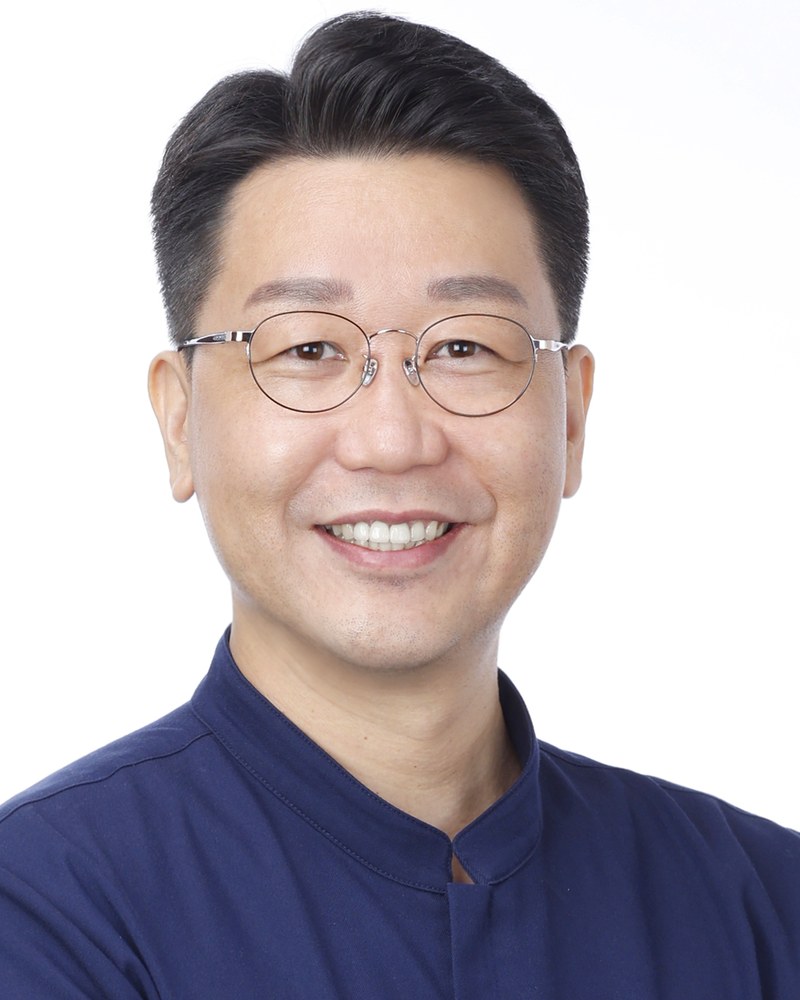
Written by Dr. Heo Ji-young (PhD in Korean Medicine Pathology, Kyung Hee University · former Research Professor of Herbology, Kyung Hee University)
IF YOU NEED CARE
Have a symptom that's been on your mind?
Choose a time on Naver, or send your concerns before your first visit.