
Why the Autonomic Nervous System Shakes the Whole Body

The short answer
Poor sleep, palpitations, indigestion, and normal tests—is it autonomic? Symptoms may shift at different sites and speeds, not through one switch; cardiac causes, anemia, thyroid disease, and other needed checks come first.
Contents
You can't sleep, your chest pounds, digestion is off, and your hands and feet are cold. The symptoms look unrelated, so you end up going from department to department — and the tests usually come back normal.
There is a familiar explanation for this. The sympathetic nerve is the accelerator, the parasympathetic the brake. The accelerator is stuck down, so the whole body shakes.
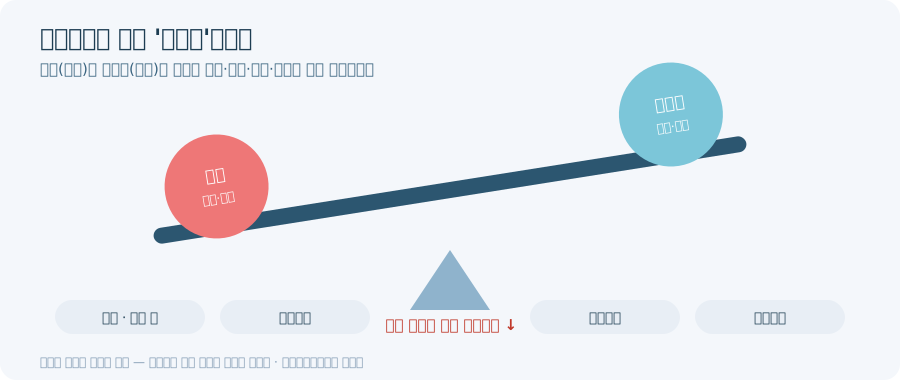
I don't use that picture. It's convenient, but the body isn't built that way.
If it were a seesaw
On a seesaw, one side has to go down when the other goes up. But these two can rise together. When something startles you, your heart races and your stomach turns at the same moment — accelerator and brake pressed at once. A seesaw can't account for that.
The more interesting part is this: the nerves that arrive differ from site to site.
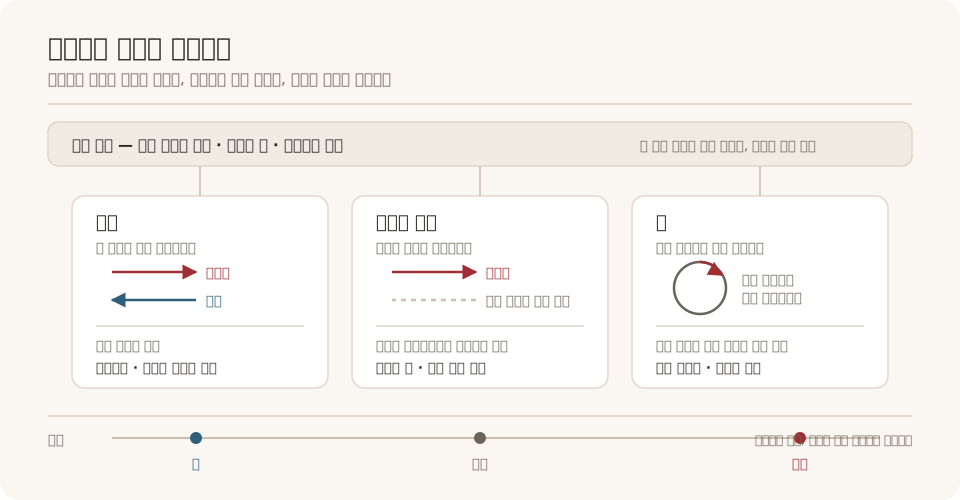
The heart gets both. They push and pull, and the rhythm comes out of that negotiation. But the blood vessels of the hands and feet receive almost no parasympathetic supply. There are nerves that tighten them and essentially none that release them.
That one fact explains a great deal in the clinic. Cold hands are not a case of the brake failing to engage. There is no brake at that site to begin with. What has tightened has to loosen on its own, in its own time.
The gut is different again. It has its own nerve network laid through it, and it keeps working even when the brain is quiet.
Then why do they arrive together?
If there is no single control panel, why do the symptoms cluster?
Because the same conditions settle over many sites at once. Prolonged tension, too little sleep, a broken rhythm — this isn't pressure on one spot. It's more like weather the whole body is standing in. Under it the heart shifts as a heart does, the vessels as vessels do, the gut as a gut does.
So in fact they don't arrive together. Sleep thins out first, the stomach gets uncomfortable a few weeks later, and the hands only turn cold after the season changes — that is the story I hear far more often. If the root were one, they would come together and lift together. In practice there is an order.
Recovery follows the same shape. In my experience digestion eases first, sleep follows, and the hands and feet come last — for the reason above. Of course this order differs from person to person.
So this is how I approach treatment
Pressing each symptom down separately doesn't work well. Nor do I go looking for one root to fix. It would be convenient if there were one. There isn't.
Of course there are people in whom one site loosening pulls the rest along, like a tangle coming undone — the snowball starting to roll the good way. I am glad when I meet such a site. But which site it will be is hard to know in advance, and not everyone has one.
What I do is closer to pushing several sites separately, but in the same direction.
Acupuncture goes straight to a site; I start with whatever is most tightly held right now. Herbal medicine carries many compounds, each acting differently at a different site — less like pressing a switch than like several hands pushing from their own positions. So the composition changes depending on which site is most unsettled. And the things we adjust in daily life — when you sleep, how you breathe, how much caffeine — land on all of it at once rather than on any one place.
I also set the clock differently. Sleep returning doesn't mean we're done, and hands still being cold isn't a failure. Knowing that each site loosens at its own pace, and waiting for it, is part of the treatment.
Neither one root nor many separate causes
Palpitations can come from the heart, dizziness from anemia or the thyroid. When that's a possibility, tests come first. It is when the tests find nothing and the symptoms continue that this conversation begins.
Several symptoms don't mean several causes, and they don't mean one root either. Several sites standing in the same weather, each shifting at its own pace — that is how I read the autonomic nervous system.
Written by Dr. Heo Ji-young (PhD in Korean Medicine Pathology, Kyung Hee University · former Research Professor of Herbology, Kyung Hee University)
IF YOU NEED CARE
Have a symptom that's been on your mind?
Choose a time on Naver, or send your concerns before your first visit.